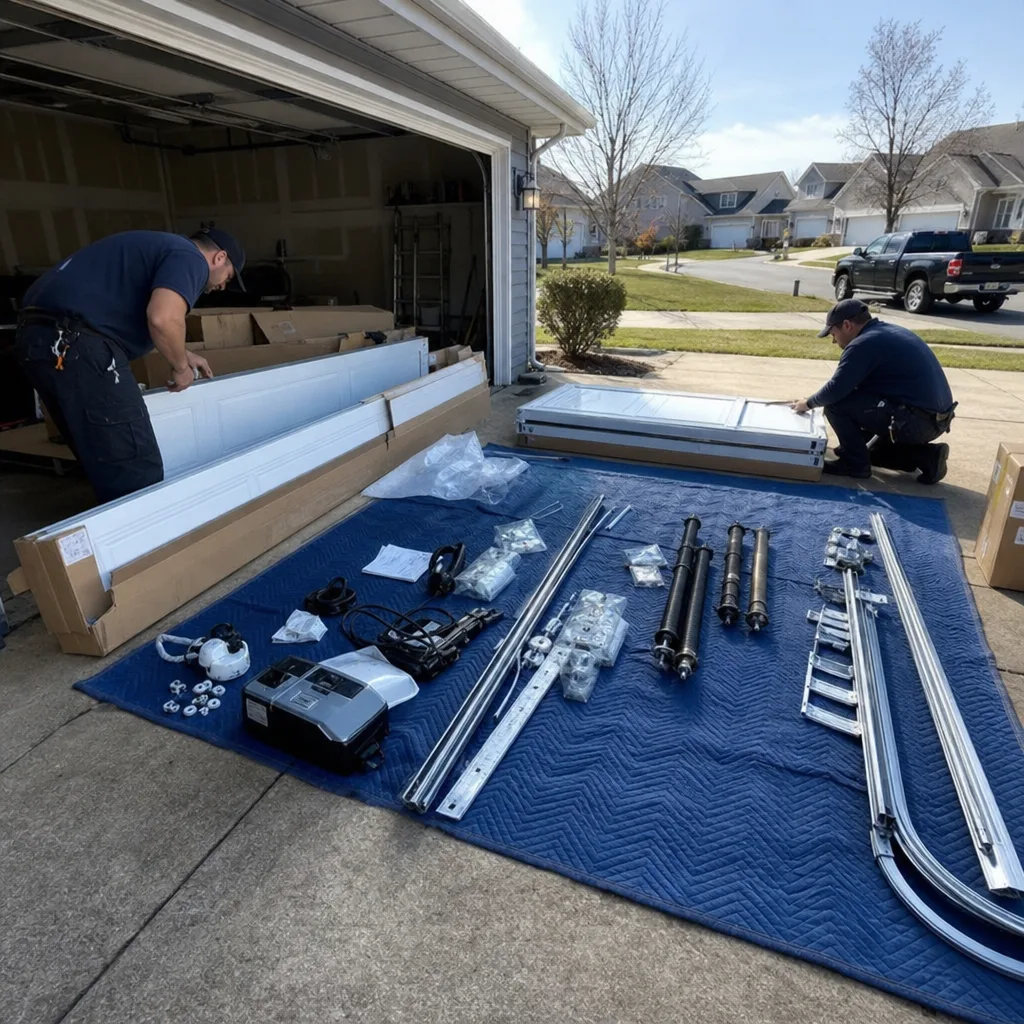
Last updated November 21, 2026
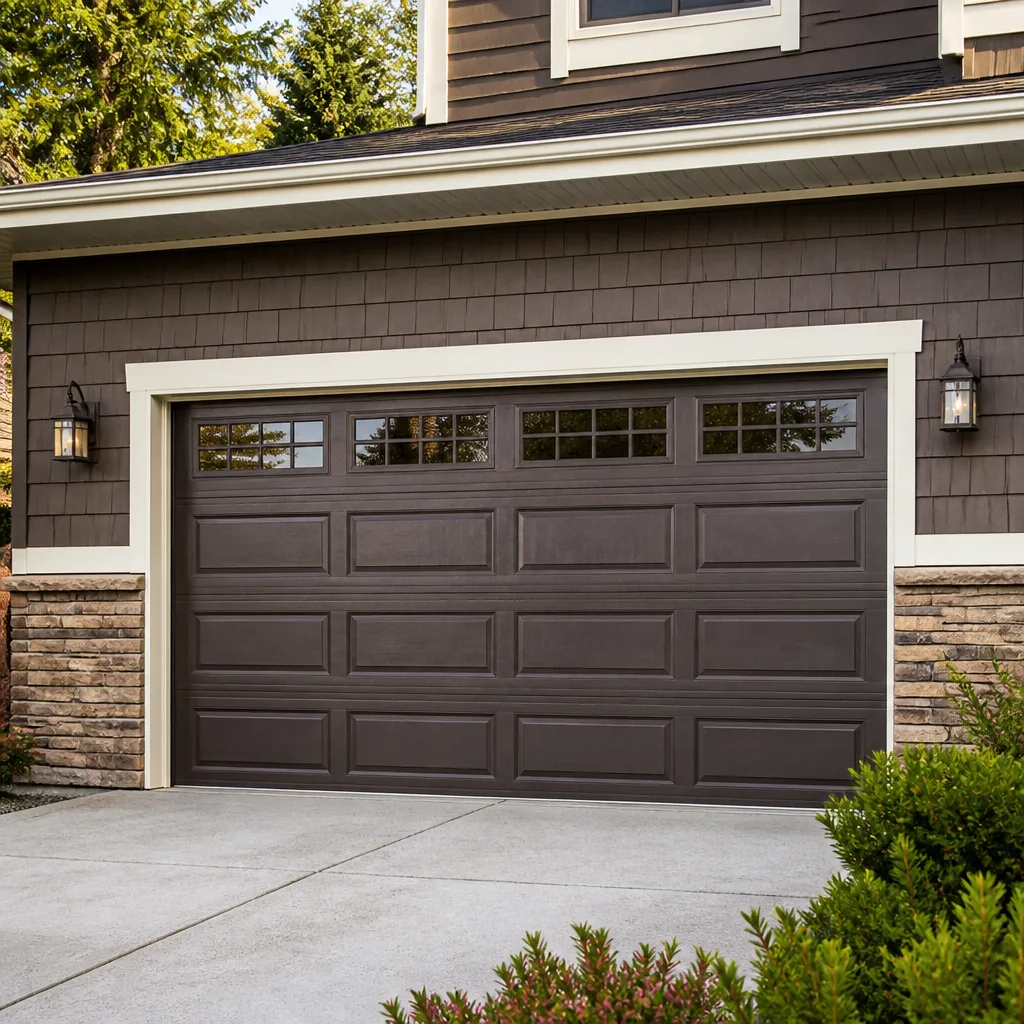 Raised-panel steel
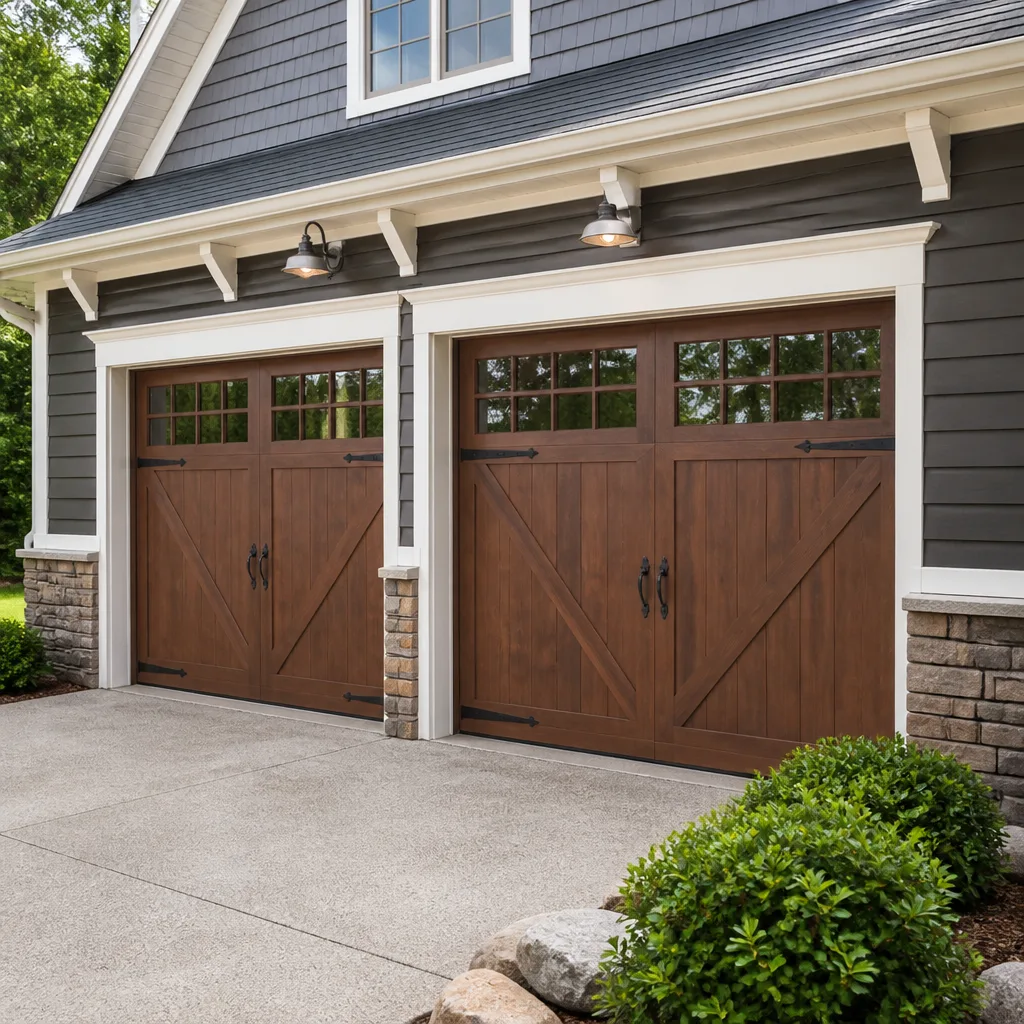 Carriage house
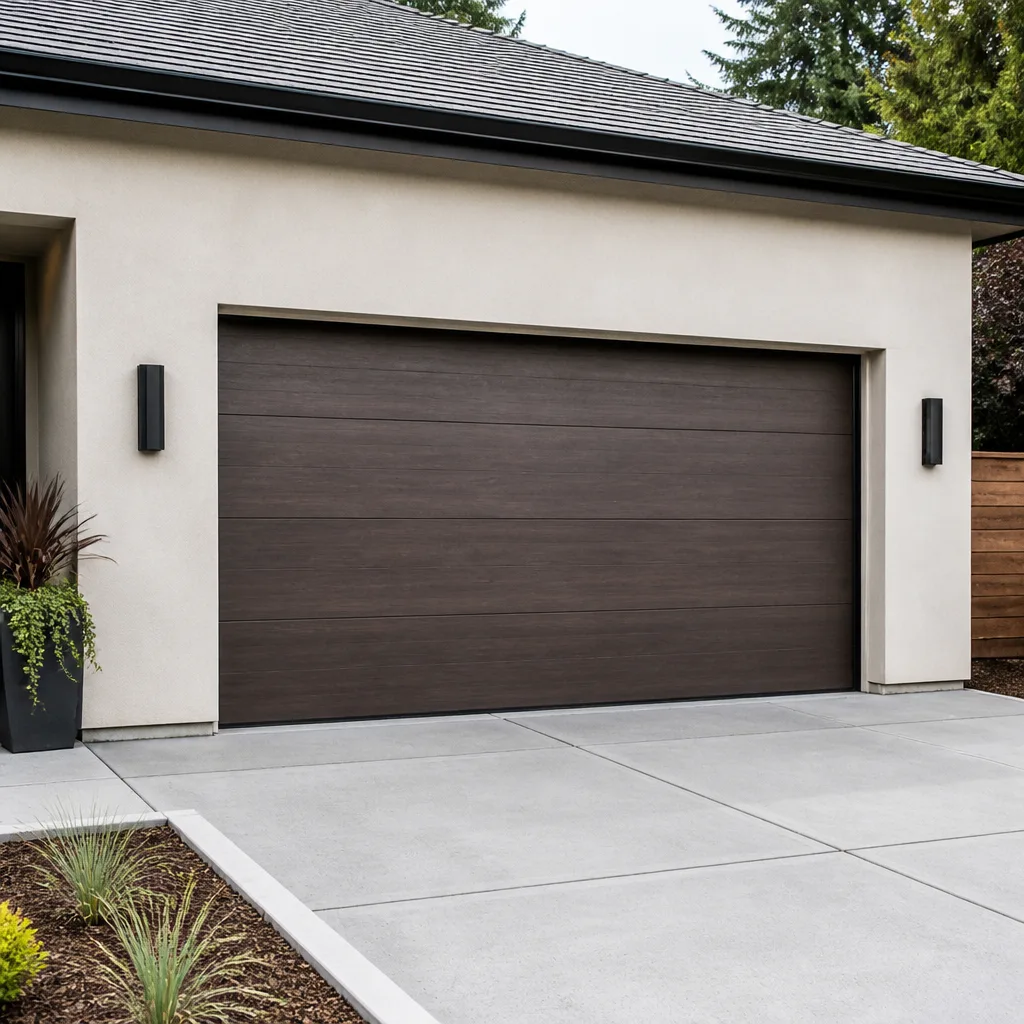 Modern flush
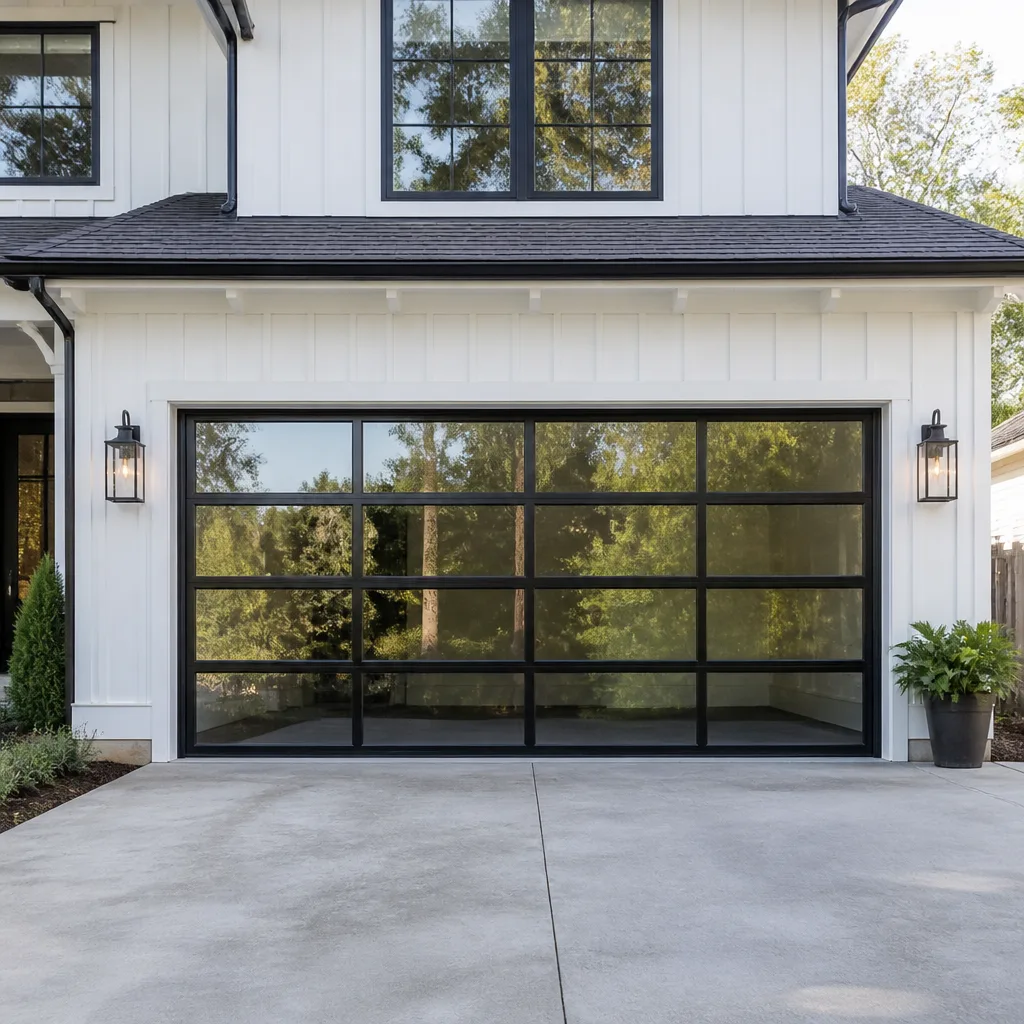 Full-view glass
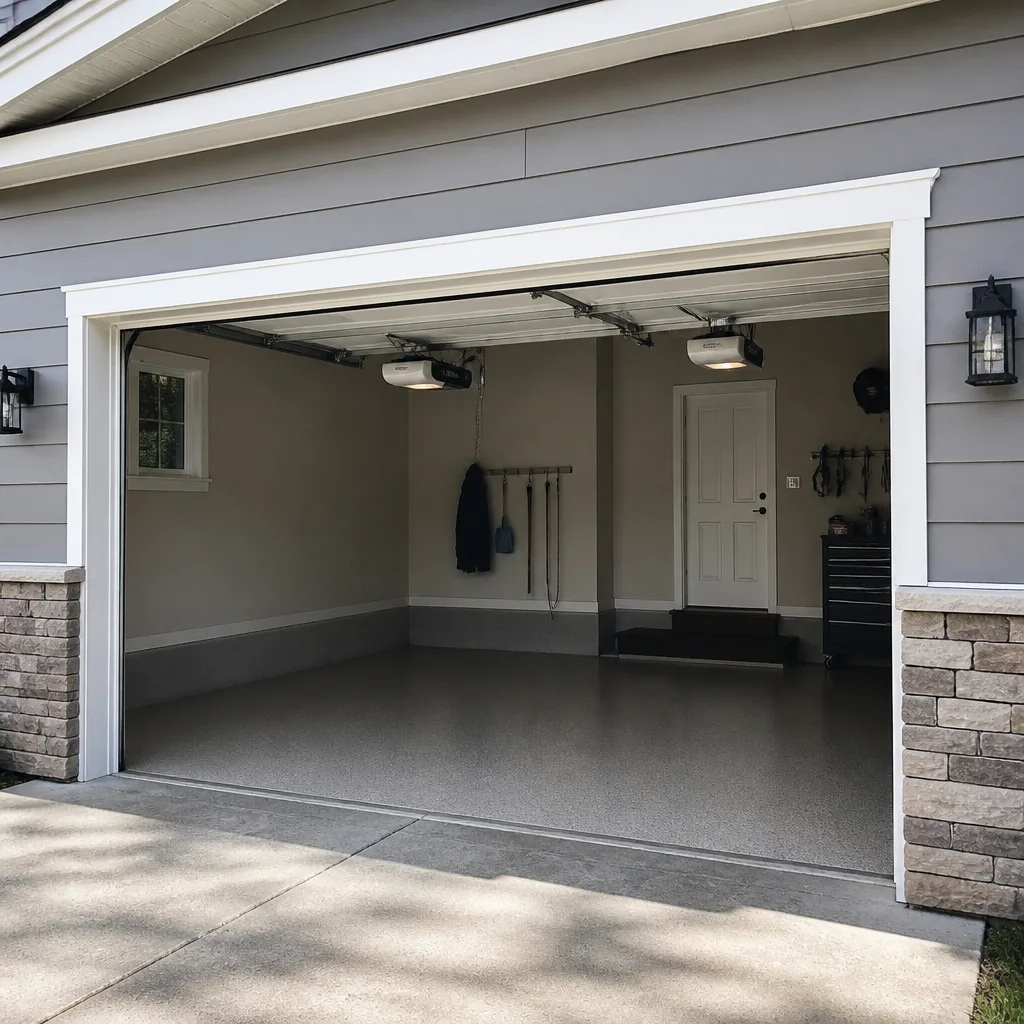 LiftMaster openers
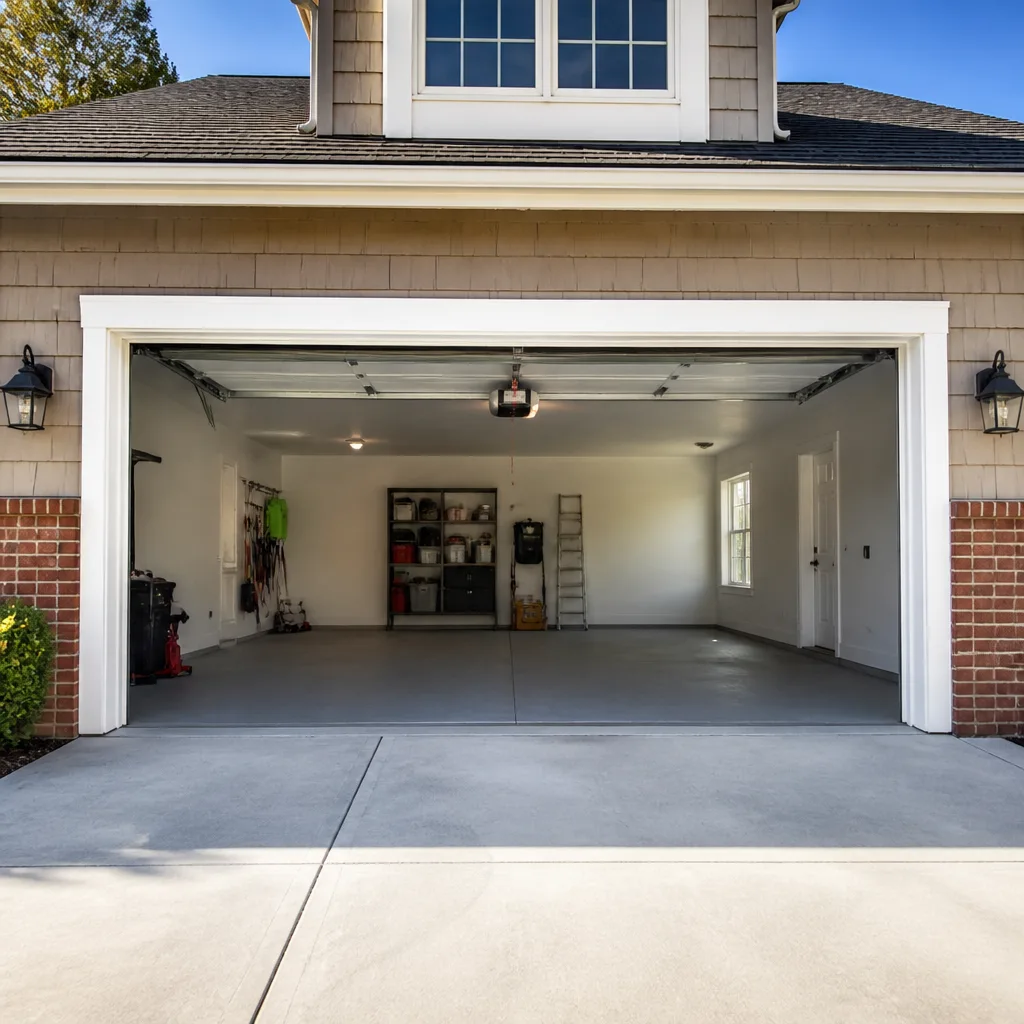 Chamberlain openers
Full 25-point door and opener safety check with every visit - springs, cables, rollers, tracks, and your LiftMaster or Chamberlain opener included
You get a price before we start. It does not change when the pro arrives.
Get your free estimateThe Complete Guide to Garage Doors in Norfolk
Most garage door guides are written for Phoenix or Denver, with advice about sun damage and dry heat. Norfolk isn’t that market. The combination of high humidity, salt-laden air carried on prevailing winds, repeated freeze-thaw cycles, and wind events along the Hampton Roads corridor puts every spring, seal, and track in your garage on a faster clock. Hardware that would last a decade inland can deteriorate noticeably sooner here. That’s not a sales pitch – it’s the plain physics of coastal living, and it changes how you should spec, maintain, and repair a door in Norfolk. This guide treats the garage door as what it actually is: a mechanical system with a lifespan that runs faster in Norfolk’s climate.
Quick Answer
The complete answer for Norfolk homeowners: your garage door is a mechanical system, and the coastal climate here – high humidity, salt air, freeze-thaw swings, and seasonal storms – shortens the life of springs, seals, and hardware faster than the national average. Material choice (galvanized or powder-coated steel, aluminum, or fiberglass composite), proper weather sealing, and correct wind-load rating for a hurricane-zone market matter more than aesthetics. Brand-specific diagnostics and scheduled maintenance are what keep a Norfolk door running safely.
Styles & brands we work with
- Raised-panel steel
- Carriage house
- Modern flush
- Full-view glass
- LiftMaster openers
- Chamberlain openers
Table of Contents
- How Norfolk’s climate shortens garage door life
- Which door materials hold up best in Hampton Roads
- Springs: the highest-risk part of the system
- Wind-load ratings and what Norfolk actually needs
- Why Norfolk foundations make floor seals tricky
- Neighborhood by neighborhood: flood zones vs inland
- Openers: smart and legacy platforms
- A simple maintenance routine
How Norfolk’s climate shortens garage door life
Humidity is the quiet killer. Norfolk averages high relative humidity across the year, and a garage – especially an attached one – traps that moisture. Every time the air swings between warm and humid overnight and cooler daytime temperatures, condensation forms on cold metal. Springs, hinges, rollers, and track hardware sit in that cycle constantly.
Salt air compounds the problem. It doesn’t need to be oceanfront to reach you – prevailing winds spread fine salt aerosol across the whole city. On bare or thinly coated steel, that film accelerates oxidation, and hardware that would take years to rust inland can show pitting far sooner. That’s why galvanized coatings and proper powder-coat finishes aren’t cosmetic upgrades in Norfolk; they’re functional requirements.
Here’s what degrading faster looks like in practical terms:
- Torsion and extension springs weaken and fracture earlier because of moisture-driven corrosion at the coils.
- Bottom seals and side weatherstripping harden, crack, and lose their sealing ability, letting in water and pests.
- Track hardware, rollers, and hinges rust, bind, and cause the door to run unevenly.
- Painted steel panels blister where the finish has been nicked, starting a corrosion pocket.
None of this is a reason to panic. It’s a reason to know your system and check it. A door that’s inspected and maintained is far less likely to fail unexpectedly, and when something does wear, we provide garage door repair built around diagnosing the actual cause rather than guessing.
Which door materials hold up best in Hampton Roads
Material choice is the single biggest decision for a Norfolk door, because the climate stresses every surface. Here’s how the common options perform across humidity, freeze-thaw swings, and salt exposure.
- Steel (galvanized or powder-coated). The most common residential choice and a strong performer here when the finish is intact. Gauge matters: heavier-gauge steel resists dents and holds finish longer. The weak point is any cut edge or nick, where corrosion can start. Look for a good baked-on or powder-coat finish.
- Aluminum. Naturally corrosion-resistant, which makes it a good fit for the coastal air. It’s lighter and won’t rust like steel, though it dents more easily and can be more expensive. Often a smart call for humid, salt-exposed garages.
- Fiberglass composite. Won’t rust at all and handles moisture well. Finish and structural quality vary a lot between products, so it pays to know the brand. Composite doors hold up nicely in Norfolk’s humidity but can degrade under prolonged direct sun on a south-facing wall.
- Wood. Beautiful but demanding in this climate. Wood absorbs moisture, swells, and needs regular sealing. It’s the highest-maintenance choice for Norfolk and best left to sheltered or decorative applications.
Freeze-thaw cycles add another wrinkle. Norfolk gets cold snaps that freeze moisture in seams and around seals, then warm spells that thaw it. That expansion and contraction works hardware loose over time and stresses seal materials. Doors built to tighter tolerances with quality weatherstripping handle the swings better.
For most Norfolk homes, a galvanized or powder-coated steel door in a heavier gauge, or an aluminum door for salt-exposed exposures, is the practical pick. If you’re weighing a replacement, we install systems from Clopay and Amarr among other lines, and we’ll talk you through which spec fits your wall, your budget, and how exposed your garage actually is.
Springs: the highest-risk part of the system
Springs do the heavy lifting. A torsion spring (mounted on a shaft above the door) or a pair of extension springs (running along the tracks) counterbalances the door’s weight so your opener and your arms don’t have to. When a spring fails, the door suddenly weighs far more than it should, and it can come down hard.
In Norfolk, springs fail faster for two reasons. First, corrosion: moisture and salt air pit the steel wire, creating stress points. Second, the sheer number of cycles – every open and close counts. A door used several times a day racks up cycles quickly, and a corroded spring reaches its limit sooner.
Why this is the one repair to never DIY: a wound torsion spring stores enormous energy. If it slips or releases while you’re working near it, the result can be severe injury. Extension springs under load are just as unforgiving. We treat spring replacement as a dedicated, safety-first service for exactly that reason, and we recommend the same caution to every homeowner.
What to watch for:
- A loud bang from the garage, often followed by a door that won’t lift.
- A visible gap in a torsion spring coil, or a stretched, sagging extension spring.
- The door feeling unusually heavy when you lift it by hand (with the opener disengaged).
- An opener that strains or the door opening only partway.
If you notice any of these, stop using the door and have it looked at. Call (855) 522-0573 – we handle spring repair with the care the job demands, and estimates are free.
Wind-load ratings and what Norfolk actually needs
Wind-load rating is how much wind pressure a door is engineered to withstand. It’s not a marketing number; it’s a structural specification. Norfolk sits in a hurricane-exposed region, and along the Hampton Roads corridor, wind events are a real design consideration – which is why a door rated only for a mild inland market isn’t always the right choice here.
What that means in practice:
- Reinforcement matters. Doors built with heavier struts, stronger hinges, and rated hardware hold up better under wind pressure than standard residential doors.
- Installation quality is half the rating. A high-rated door installed with weak anchoring or poor track alignment won’t perform to spec. The rating assumes correct installation.
- Match the rating to the exposure. A door on an open, wind-exposed wall takes more stress than one sheltered by other structures. Knowing your exposure helps you choose.
- Check local requirements. Building departments in the region may have specific requirements for garage doors on new construction or major renovations. Ask your city’s building department what applies to your project rather than assuming.
For anyone replacing a door in Norfolk, this is where a conversation with a professional pays off. We’ll help you understand what rating makes sense for your situation and install it correctly, so the number on the label means something. Our garage door installation work is built around getting the anchoring and alignment right.
Why Norfolk foundations make floor seals tricky
Here’s something most garage guides skip: the ground under your door. A lot of Norfolk housing stock sits on pier-and-beam or crawl-space foundations rather than slab-on-grade. That affects how the garage floor meets the door, and it’s a common source of sealing trouble.
With a crawl-space or pier-and-beam structure, the garage floor and the wall framing don’t always settle in perfect unison. Floors can be uneven, and over time the gap under the door changes shape. A bottom seal that fits perfectly on day one can develop gaps at the corners or along one side as the structure shifts with moisture and seasonal movement.
Slab-on-grade markets don’t deal with this the same way – their challenge is mostly a flat, stable surface. In Norfolk, the practical result is more water intrusion under the door, more draft, and more pests finding the gaps. When we look at a sealing problem, we look at the floor line and the door’s travel, not just the rubber.
What helps:
- A quality bottom seal that compresses to fill small irregularities.
- Checking and adjusting the door’s travel so it seats evenly across the opening.
- Addressing obvious floor humps or gaps where they interfere with the seal.
- Keeping the threshold clear so the seal isn’t forced to bridge a big void.
If your garage takes on water or feels drafty, the seal and the door’s alignment are the first things to check. That’s the kind of detail a good garage door opener repair visit can also flag, since a door that doesn’t seat right often stresses the opener too.
Neighborhood by neighborhood: flood zones vs inland
Norfolk isn’t one climate – it’s several microclimates, and where you live should shape how you spec a door.
Flood-prone and low-lying neighborhoods like Larchmont and Ocean View. These areas see more moisture exposure, standing water during storm events, and higher humidity at ground level. Doors here benefit from corrosion-resistant materials (aluminum or well-finished galvanized steel), robust bottom seals, and hardware that tolerates frequent wet conditions. If flooding is a genuine risk for your block, talk to your city’s building department about what’s required for your property, and consider how the door and its hardware will fare if water reaches them.
Inland neighborhoods like Kempsville. Further from the open water and storm surge, the exposure profile is a little gentler on the corrosion side, but humidity and freeze-thaw still apply. Standard galvanized steel or fiberglass composite doors do well here, and the emphasis shifts toward finish quality and sealing rather than maximum corrosion resistance.
Older housing stock throughout the city. Many Norfolk homes were built decades ago, and garages often have uneven floors, older openers, and doors that have been repaired piecemeal. A door that’s been patched repeatedly may be better replaced than repaired, and if the existing opener is legacy hardware, it may be worth upgrading at the same time.
We work across Norfolk and know these differences. That local context is part of every estimate we give.
Openers: smart and legacy platforms
The opener is the part most people interact with, and it’s also where brand knowledge pays off. Smart openers from LiftMaster and Chamberlain dominate modern installs, while legacy platforms like Craftsman and Genie are everywhere in older Norfolk homes. Each has its own quirks, remote systems, and failure patterns.
Common opener symptoms and what they usually point to:
- Door won’t respond to the remote but works on the wall button. Often a remote, battery, or logic board issue.
- Door reverses immediately or won’t close. Frequently a safety sensor problem – misalignment, dirt, or a sun-glare issue on the sensor lens.
- Motor runs but the door doesn’t move. Could be a stripped gear, a broken spring (the opener can’t lift a dead-weight door), or a disengaged trolley.
- Grinding or straining. Often a sign the door itself is binding and the opener is fighting it.
The key diagnostic point: an opener problem and a door problem look similar and get confused often. If the springs are broken, replacing the opener won’t help – the door is too heavy for any motor. We diagnose the actual cause before recommending anything, which is why we work across LiftMaster, Chamberlain, Genie, and Craftsman systems rather than pushing one brand.
For smart openers, we can also help with connectivity and app setup. For older units, we’ll tell you honestly when a repair is worth it and when replacement makes more sense. When it’s time for a new opener or a full door, we’re set up to handle the whole job – from garage door repair to installation – so you’re not calling a second company midway through.
A simple maintenance routine
A little attention goes a long way in this climate. Here’s a routine any Norfolk homeowner can follow.
- Look at the springs and cables for rust, gaps, or fraying. Don’t touch or adjust them – just note what you see and report it.
- Test the balance. With the opener disengaged, lift the door halfway. It should stay put. If it drops or won’t hold, the springs need attention.
- Check the bottom seal for cracks, hardening, or gaps at the corners, especially on uneven floors.
- Wipe down and inspect hardware for rust, and keep the track clean of debris.
- Test the safety sensors by blocking the beam – the door should reverse.
- Listen. New noises – grinding, squealing, popping – are early warnings worth acting on.
Keep the garage ventilated where you can, and watch for signs of moisture. A quick annual professional check catches things early, and it’s cheaper than an emergency repair. Our technicians have up to 15 years of experience, and we’re glad to take a look before a small issue becomes a big one.
Common Mistakes to Avoid
- Choosing a door by looks alone. In Norfolk, finish and corrosion resistance matter more than color. A beautiful door with thin coating can start pitting within a few years.
- Ignoring a noisy or slow door. Grinding and straining usually mean something is binding or wearing. It rarely fixes itself, and it puts wear on the opener.
- Treating a broken spring as a DIY weekend project. Wound springs store dangerous energy. This is the one repair to leave to trained technicians.
- Buying the wrong opener for the door. A door that’s binding, or one with heavy springs, needs the right motor and setup. Mismatching the two wears both out.
- Skipping the floor seal on an uneven foundation. In Norfolk’s pier-and-beam and crawl-space homes, a seal that doesn’t compensate for floor movement lets in water and cold air.
- Replacing a whole door when a repair would do. Not every problem needs a new door. Diagnostics first, replacement only when it’s the right call.
- Assuming a mild-market wind rating is enough. In a hurricane-exposed region, check what your door is rated for and how it’s anchored.
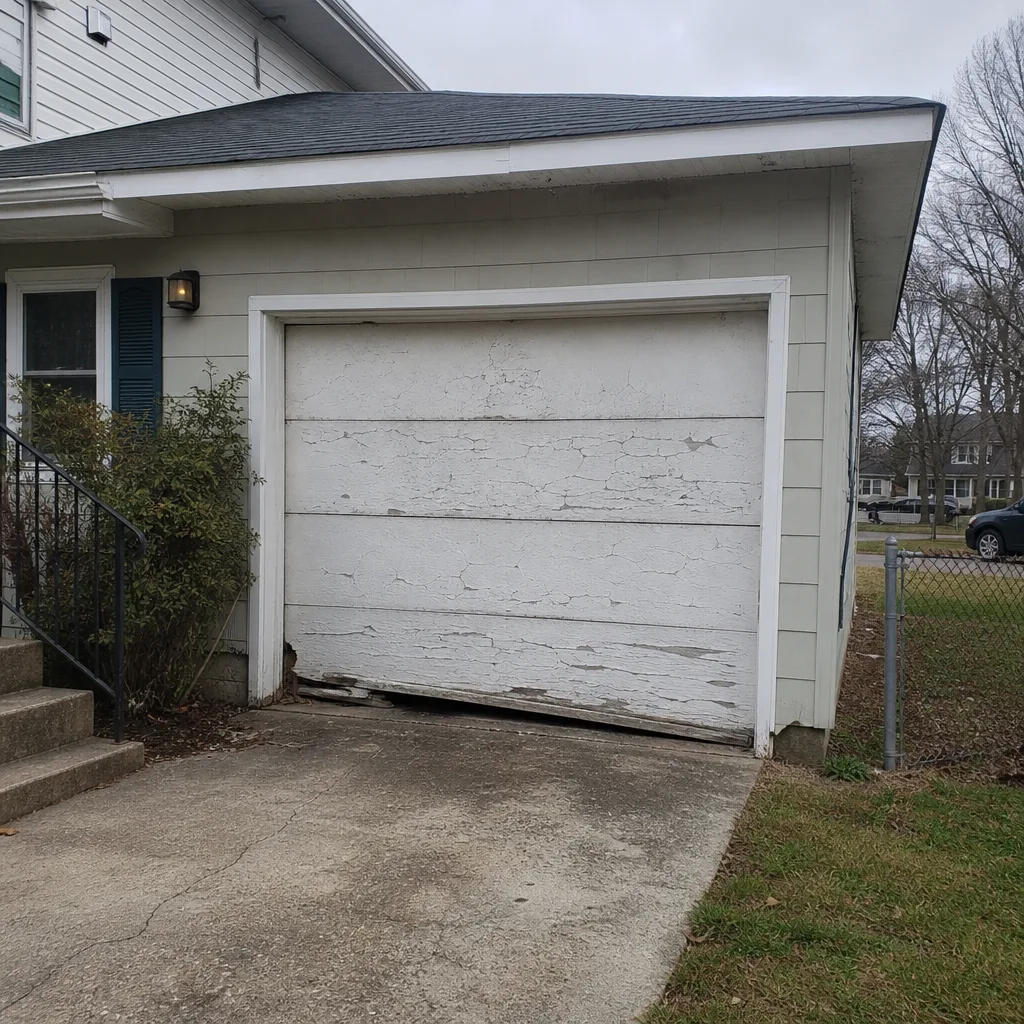
See the difference
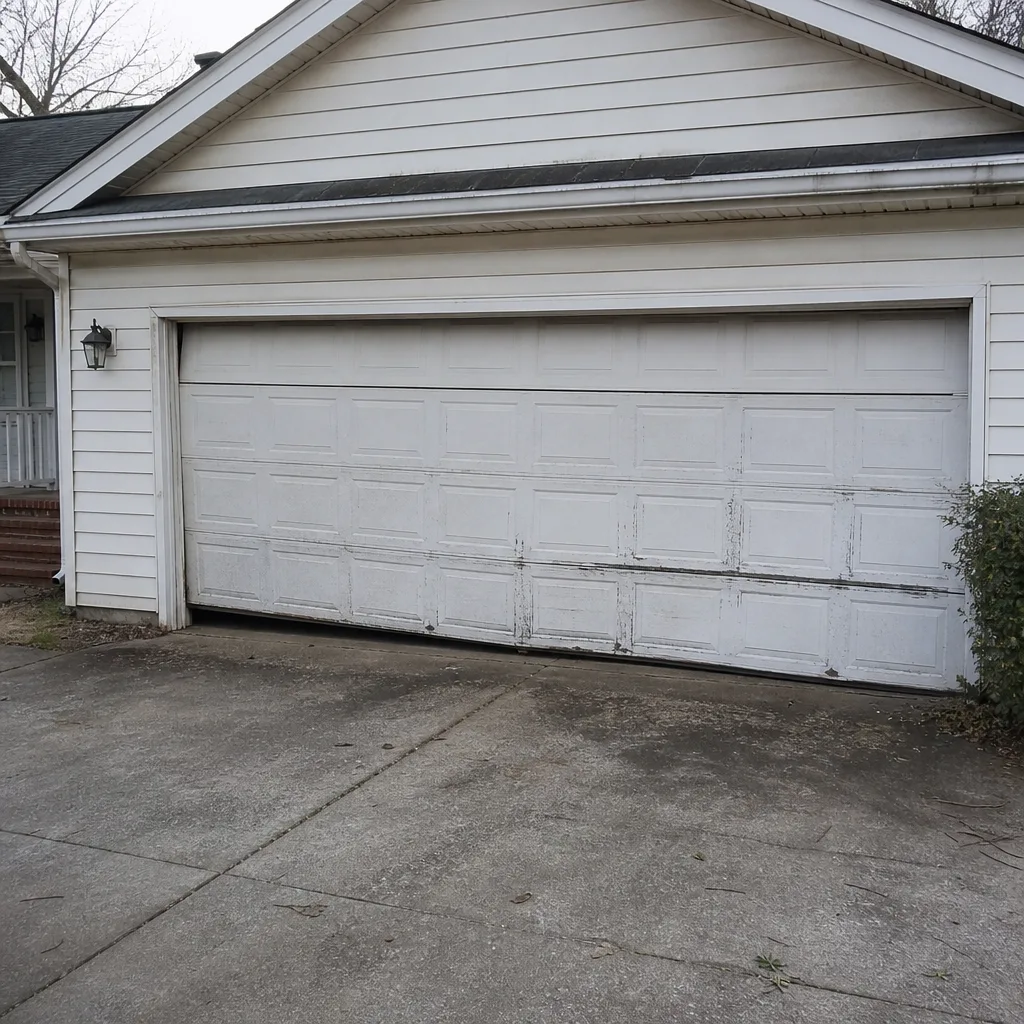 Before
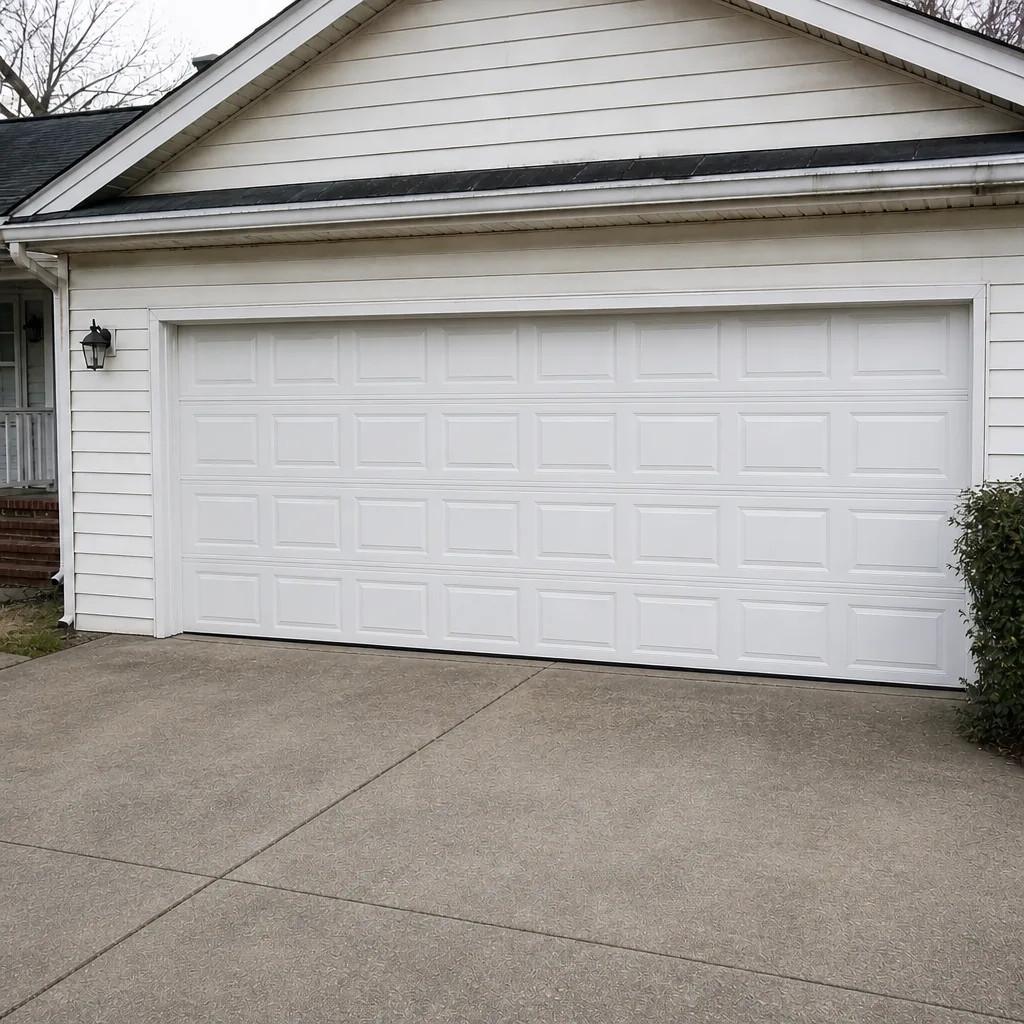 After
 Before
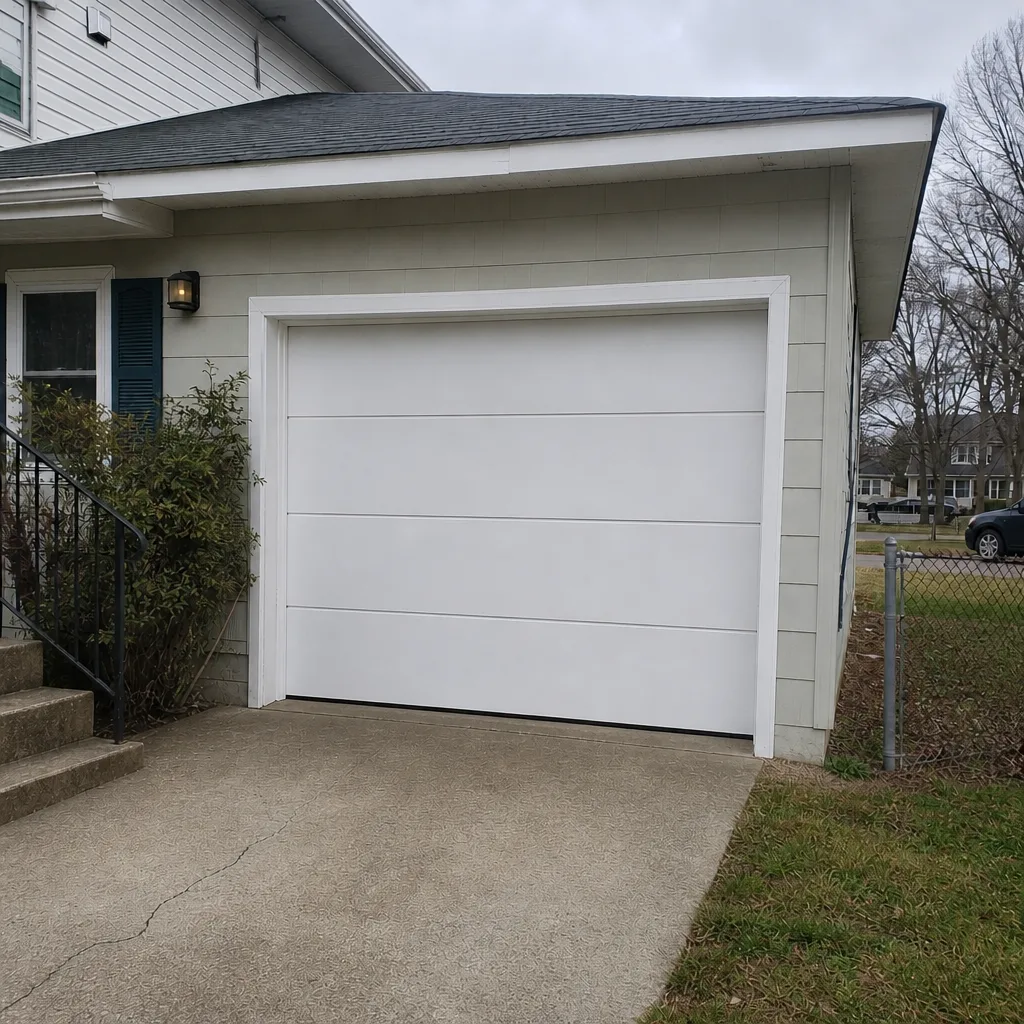 After
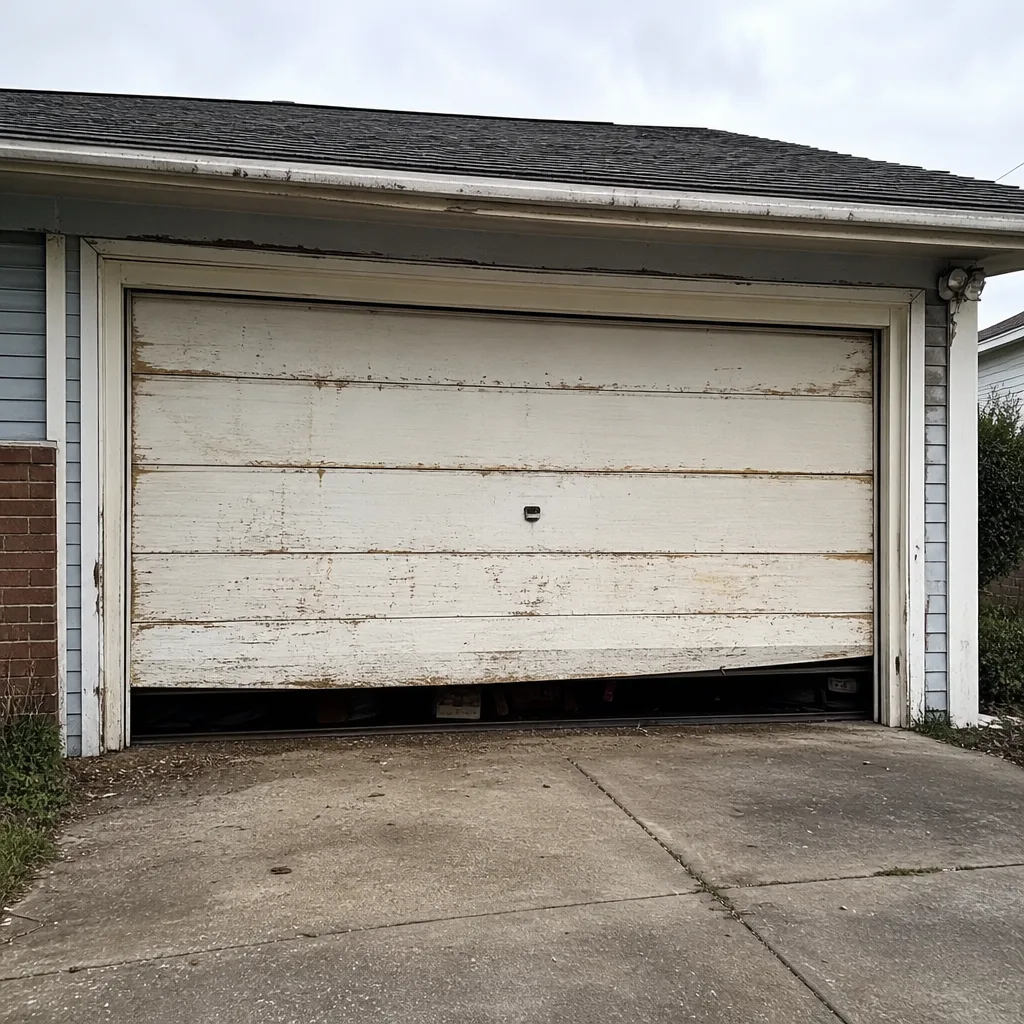 Before
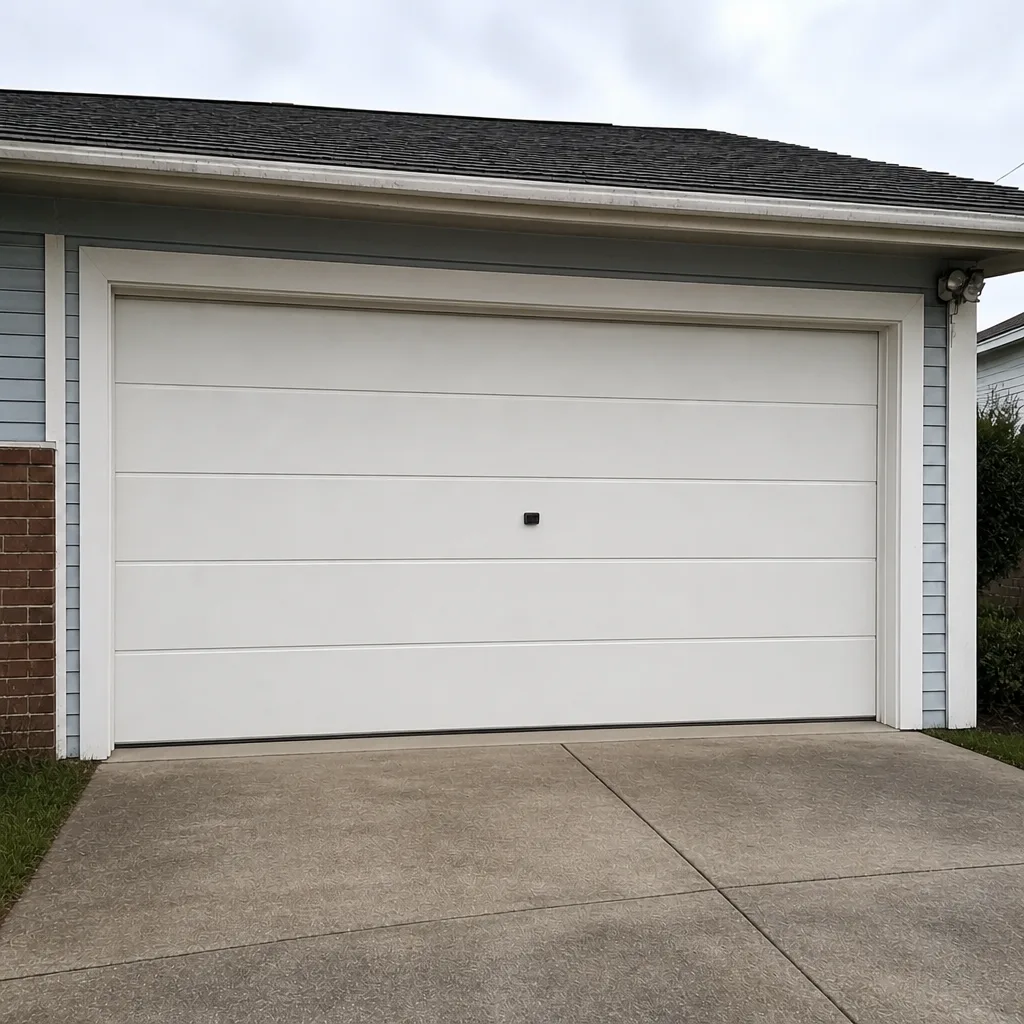 After
When to Call a Professional
Some jobs are fine to handle yourself: wiping down hardware, clearing the track, replacing a remote battery. But there are clear signals it’s time to call us. A broken or visibly sagging spring, a door that won’t open or close evenly, cables that look frayed, or anything that makes you worry about the door coming down hard – those are situations for trained hands. The same goes for a door that takes on water, an opener that’s straining, or a full replacement decision where the wind rating and installation quality matter. Garage Door Repair Norfolk Pros offers free estimates in Norfolk – call (855) 522-0573, and we’ll diagnose the actual problem before recommending a fix.
Frequently Asked Questions
Spring replacement is quoted per job, and the final price depends on whether you have one spring or a matched pair, the door’s weight, and access. We give a written estimate before any work starts, so you’ll know the price upfront. Call (855) 522-0573 for a free estimate.
Corrosion. Norfolk’s humidity and salt-laden air pit the steel wire in springs, and every pit is a potential fracture point. Corroded springs reach their cycle limit sooner, so they tend to fail earlier than the same spring would in a drier climate.
We offer emergency garage door service for urgent, same-day situations, and we handle broken springs, dead openers, and doors that won’t close. Call (855) 522-0573 and we’ll tell you what’s available. Don’t force a stuck door – especially if it’s sagging.
Aluminum, because it doesn’t rust, and well-finished galvanized or powder-coated steel are the strongest choices for salt-exposed areas. Bottom seals and quality hardware matter just as much as the panel material. We’ll help you choose based on how exposed your garage actually is.
Norfolk is in a hurricane-exposed region, so a door rated for that exposure is the safer choice, and correct installation is part of making the rating real. Ask your city’s building department what’s required for your project, and we’ll help you match a door and installation to it.
Your written estimate sets the price. If we find something different once we’re on site – like a hidden issue or a second problem – we’ll talk to you about it before doing any extra work. You’ll always know the cost before we start.
The Bottom Line
Norfolk is not an easy climate for a garage door. Salt air, humidity, freeze-thaw, and wind exposure all put the system on a faster clock, so material choice, sealing, wind rating, and maintenance matter more here than in a mild market. Spring integrity and floor seals are the two things to watch most closely. Repair first, replace only when diagnostics say it’s time, and keep ahead of corrosion so a small fix doesn’t become an emergency. If you’d like a straight answer on your door, our Garage Door Repair Norfolk Pros team is ready to help.
Ready to get your garage door sorted? Call (855) 522-0573 for a free estimate. We’ll diagnose the actual problem, explain your options, and give you a written price before any work begins – whether it’s a spring, an opener, or a full replacement.
Written by the team at Garage Door Repair Norfolk Pros.