Last updated November 21, 2026
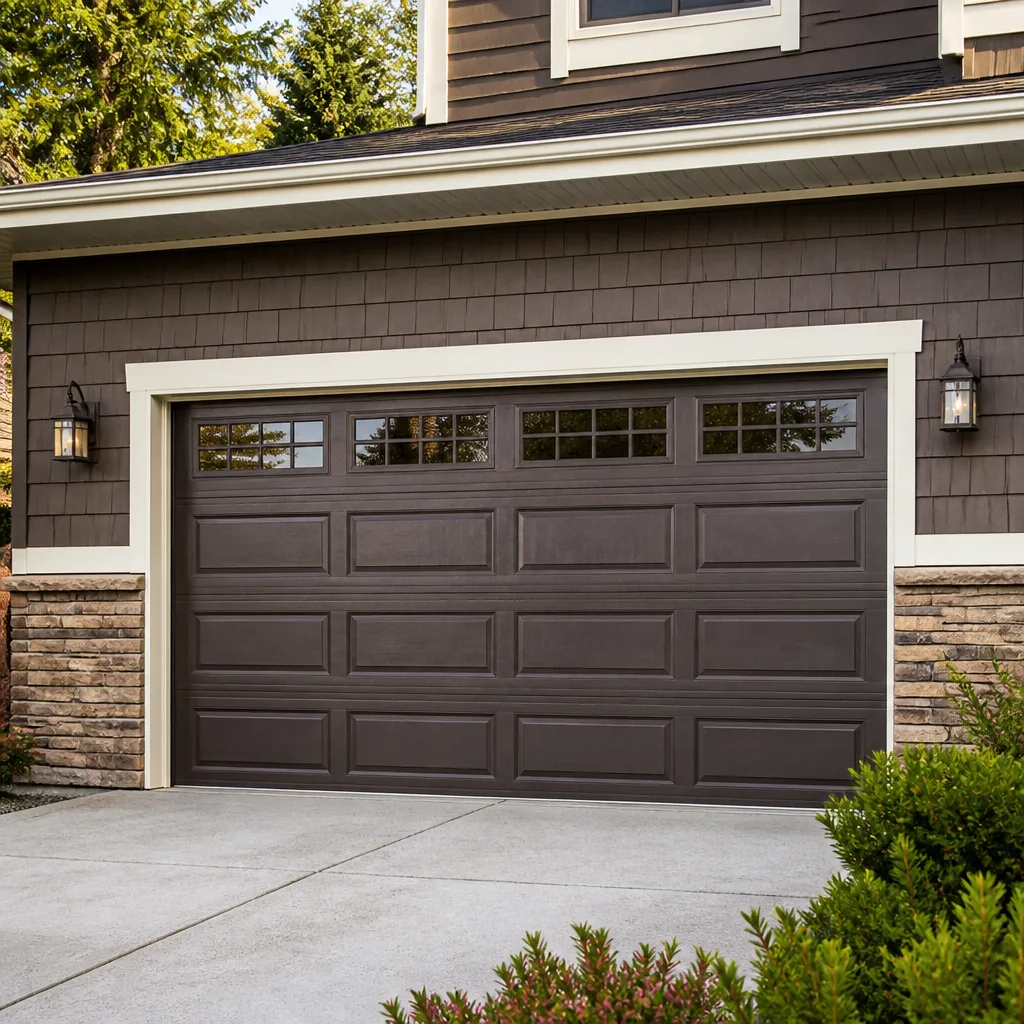 Raised-panel steel
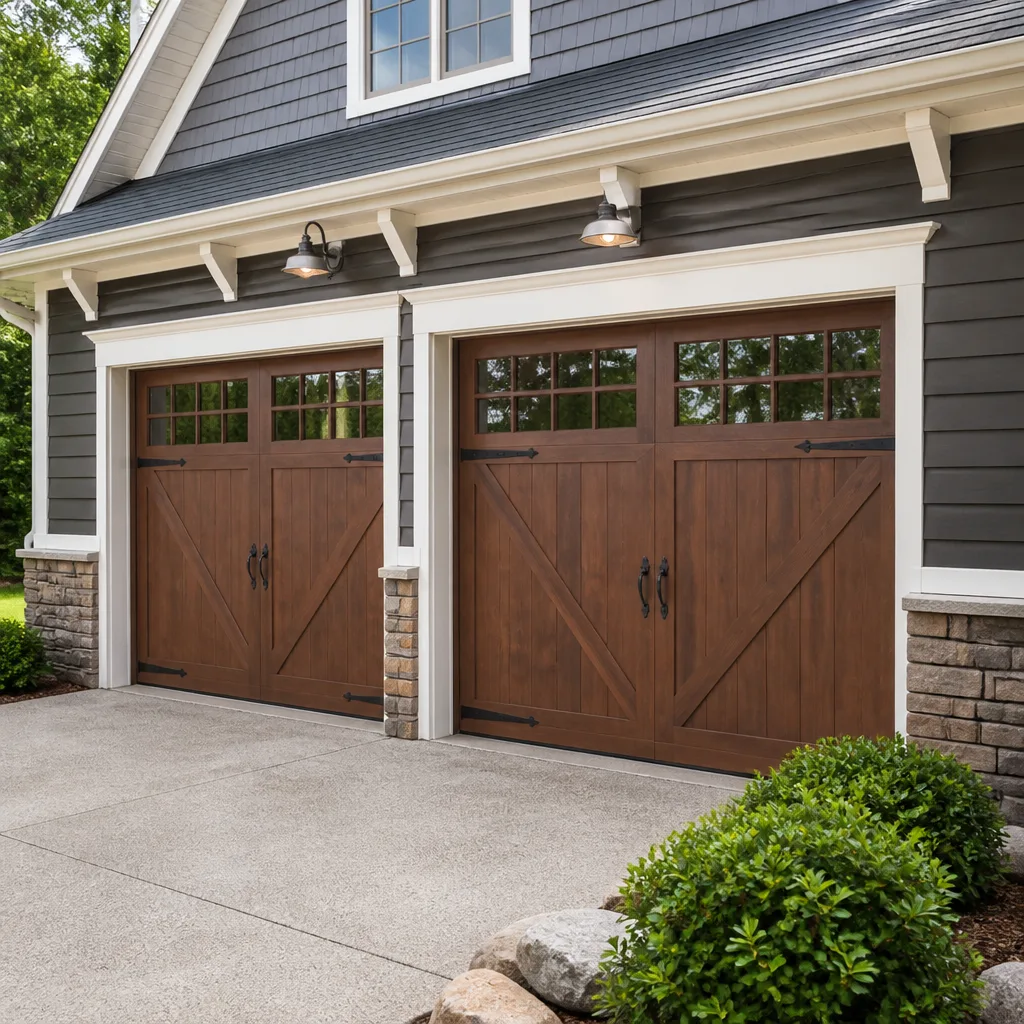 Carriage house
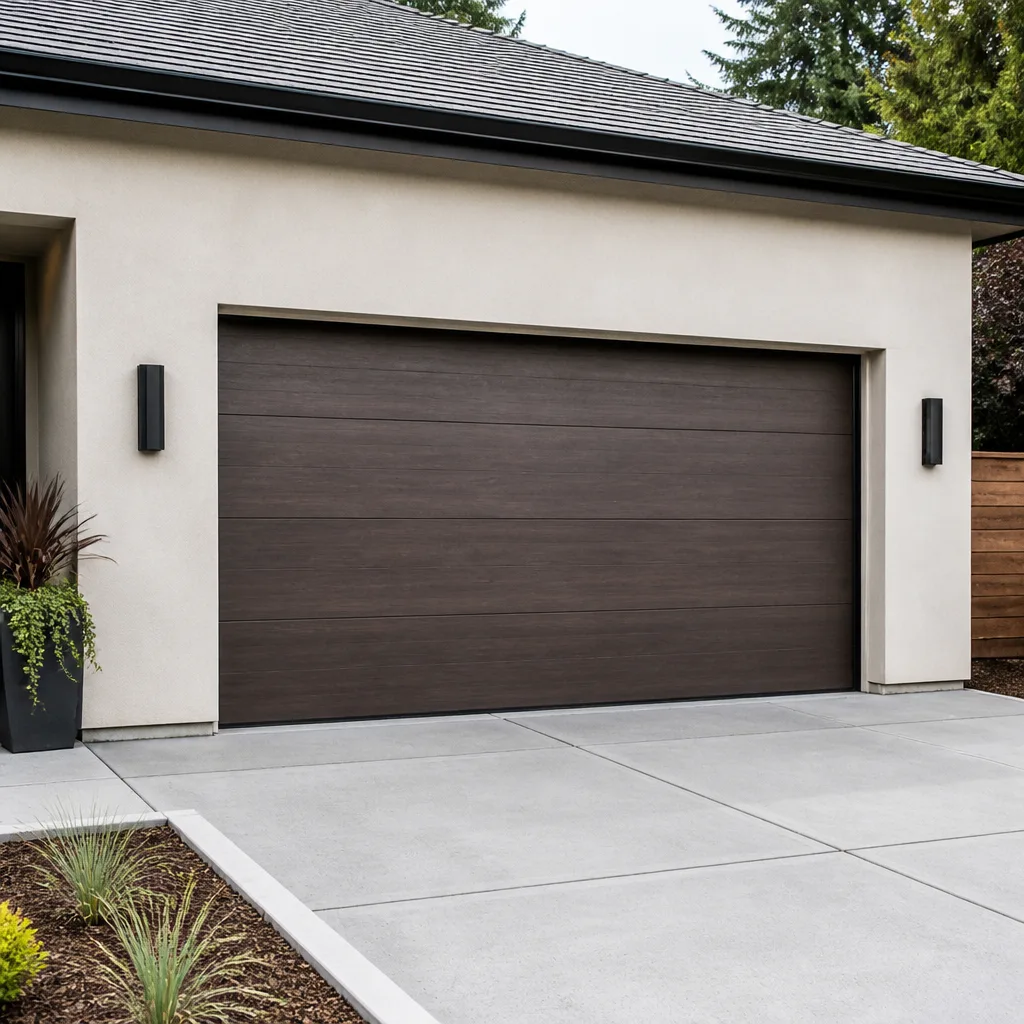 Modern flush
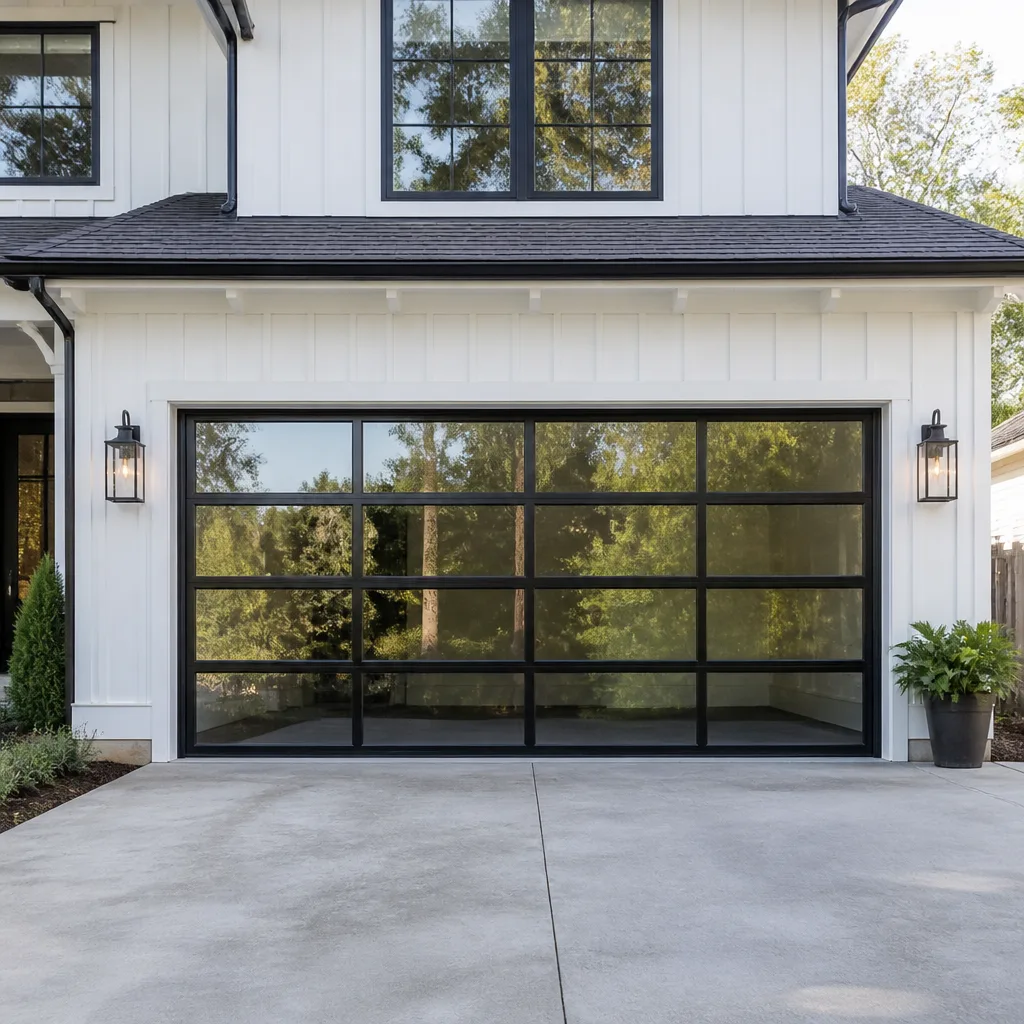 Full-view glass
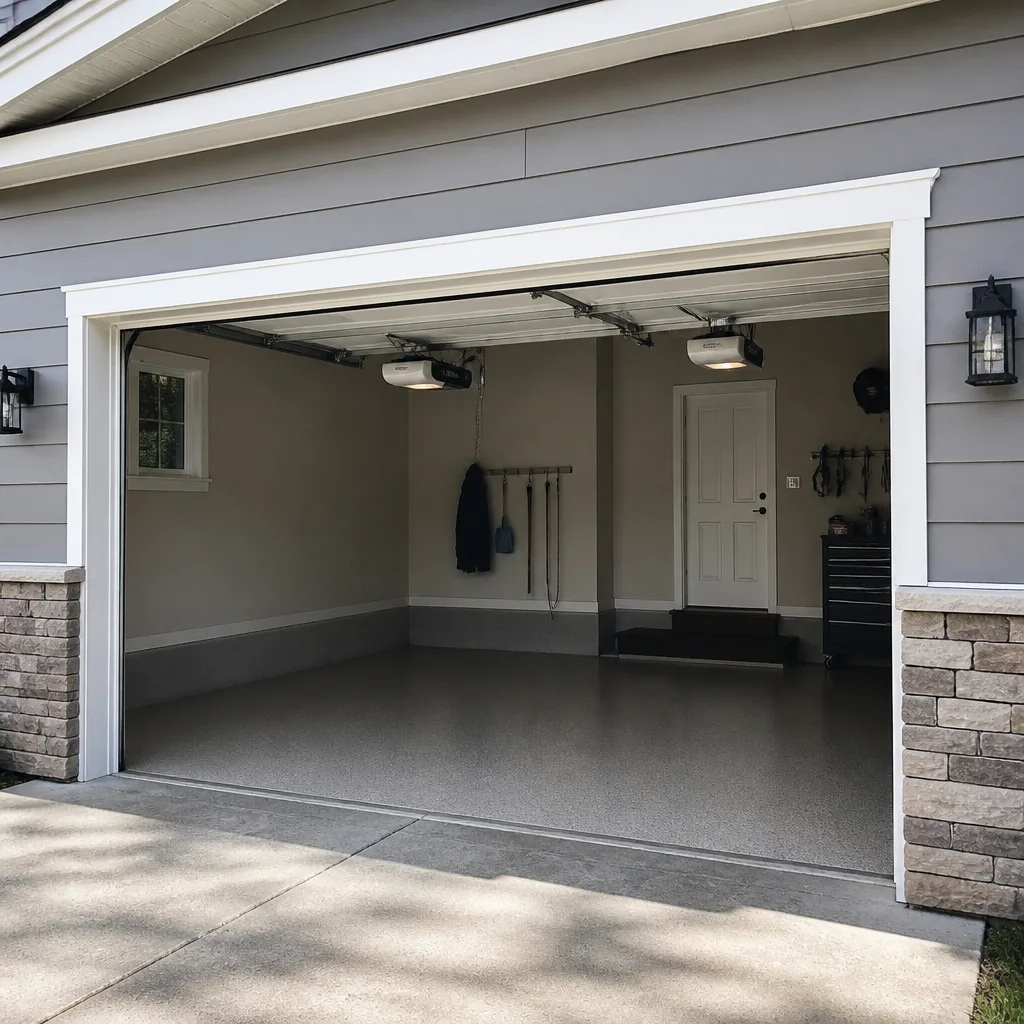 LiftMaster openers
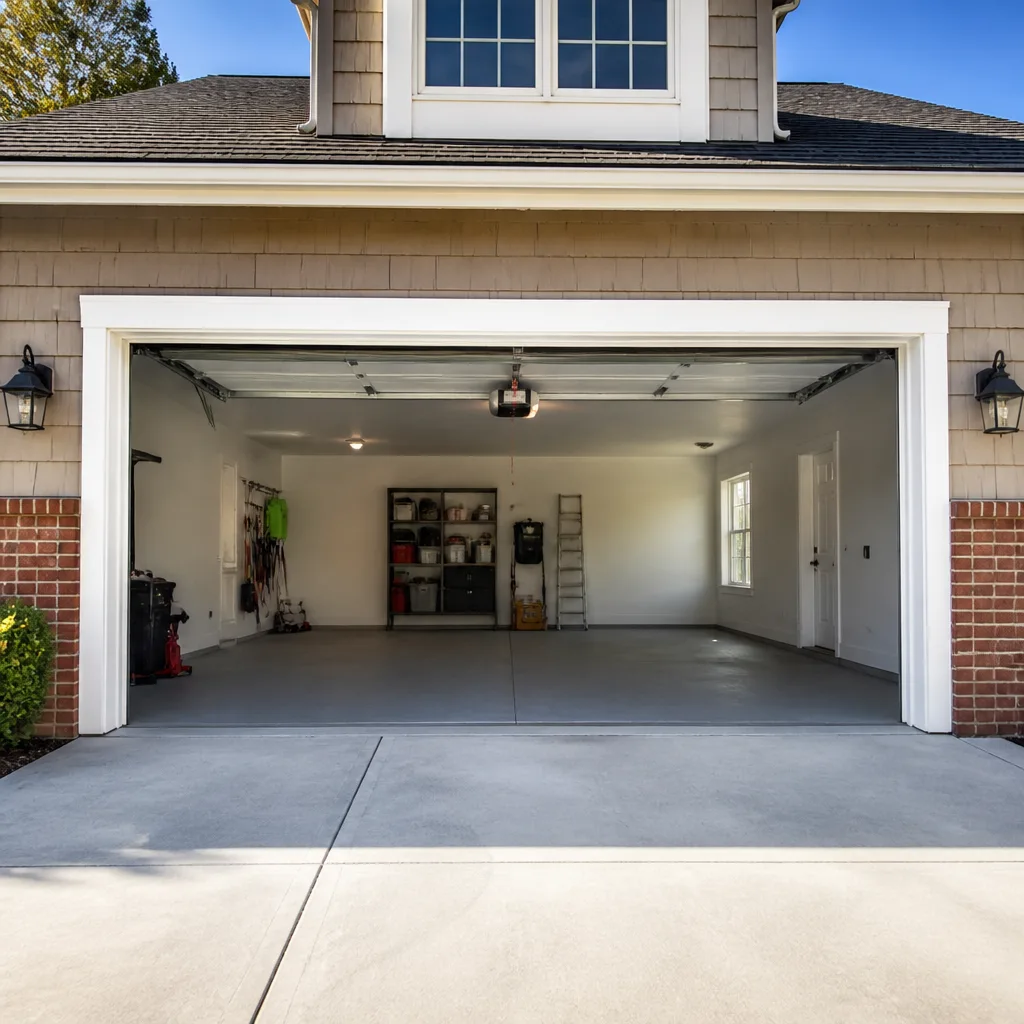 Chamberlain openers
Full 25-point door and opener safety check with every visit - springs, cables, rollers, tracks, and your LiftMaster or Chamberlain opener included
You get a price before we start. It does not change when the pro arrives.
Get your free estimateGarage Door Emergency Preparedness Guide for Norfolk Homes
Most homeowners treat a garage door like an appliance: it works until it doesn’t, and then they call someone. That assumption fails badly in Norfolk. A garage door is the largest moving assembly on a house and, during a hurricane watch, the largest and most wind-vulnerable opening in the entire building envelope. When one fails under storm conditions, you’re not managing a broken convenience. You’re managing a structural problem and a security gap at the same time. The response that keeps you safe in a wind event is the opposite of the response that keeps you safe when a spring snaps on an ordinary morning. This guide walks through both, including what to do in a power outage when the opener is dead, how to use the manual release on the openers most Norfolk homes actually have, and how to decide between calling an emergency technician and bracing the door until a scheduled visit. We work on LiftMaster, Chamberlain, Genie, Craftsman, Clopay, Amarr, Wayne Dalton, and Raynor systems, and the advice below is written around how those systems really behave when something goes wrong.
Quick Answer
Norfolk garage door emergencies fall into two categories with opposite priorities. Storm-related failures call for securing the opening first – bracing, locking down, and preventing wind or water intrusion – then repairing once conditions are safe. Mechanical failures (snapped springs, dropped doors, dead openers) call for keeping people and vehicles clear of the door, then getting a trained technician out the same day because the door becomes a security and entrapment risk. Call (855) 522-0573 and we’ll help you figure out which situation you’re facing and how urgently it needs a visit.
Styles & brands we work with
- Raised-panel steel
- Carriage house
- Modern flush
- Full-view glass
- LiftMaster openers
- Chamberlain openers
Table of Contents
- The Two Kinds of Garage Door Emergencies in Norfolk
- What to Do in a Power Outage During a Hurricane Watch
- How to Use the Manual Release on LiftMaster, Chamberlain, and Genie Openers
- Pre-Storm Protocol: Locking a Door You Can’t Repair in Time
- When a Spring or Cable Drops the Door on a Vehicle or Person
- Post-Storm Inspection: What to Check Before You Reconnect the Opener
- Emergency Technician or Temporary Bracing? How to Decide
- Common Mistakes to Avoid
The Two Kinds of Garage Door Emergencies in Norfolk
The single most useful thing you can understand about garage door emergencies is that they split cleanly into two categories, and the wrong response to either one makes things worse. Knowing which category you’re in decides everything that follows: whether you touch the door, whether you call, and how fast you need someone on site.
Category one: storm-related failures. A named storm is approaching or already here, and the door is being pushed by wind, loaded by water, or has been left vulnerable because a panel buckled or a track bent. In this category, the priority is not repair. The priority is securing the opening so the storm can’t get inside the house. That might mean bracing the door, locking it down manually, and accepting that it’s out of commission until the weather clears. A failed door during a wind event is a structural emergency, not a scheduling problem.
Category two: mechanical failures. The weather is normal and something inside the system broke. A torsion or extension spring snapped, a cable let go, the opener quit, or the door came off its track. Here the priority flips. The door is now a security hole in the back of your house and, if it’s stuck open or partially down, an entrapment risk. You want it addressed fast, by a trained technician, and you do not want to force it.
Where Norfolk homes sit matters to both categories. The region’s storm season and periodic tidal flooding mean a garage that takes on water during a weather event can leave a door’s tracks and bottom seal sitting in standing water, which affects how the door operates once things dry out. That’s a post-storm inspection item, not something to fix mid-storm. And the housing stock matters too: older homes with heavier wood doors and newer builds with lightweight steel panels fail in different ways, so the door’s age and material shape what you’re looking at. Our technicians have up to 15 years of experience diagnosing both. If you’re not sure which category you’re in, that call is worth making early rather than standing in the dark guessing.
What to Do in a Power Outage During a Hurricane Watch
When the power goes out during a hurricane watch, the opener is dead and the door won’t respond to the remote or the wall button. It’s not broken – it has no power. The fix is the manual release, and the reason most people fumble it is that they’ve never used it and the release mechanism has been sitting untouched for years. Here’s how to approach it calmly.
First, understand what the opener actually does. A chain-drive or belt-drive opener holds the door in the closed position through the carriage and rail, not through the springs. Cutting the power doesn’t release the door. To move it by hand you have to disengage the carriage from the rail. On most residential openers that’s done with the red emergency release cord hanging from the carriage.
- Clear the area first. Make sure nobody is standing under the door and no vehicle is directly beneath the path of the door. The door will be heavier than you expect once it’s disengaged.
- Find the release cord. It hangs from the carriage on the rail, usually red, sometimes with a T-handle. If it’s not visible, look along the rail near the door.
- Pull straight down, not sideways. A firm downward pull disengages the carriage. If the cord feels stiff, work it gently; don’t yank or the cord or handle can separate.
- Lift the door by hand. Use the bottom section or the lift handle if there is one, and lift with your legs, not your back. The springs, if they’re intact, do most of the work. If the door feels extremely heavy, a spring may already be broken – stop and leave it.
- To close it manually later, guide it down slowly and make sure it seats fully. Don’t let it drop.
That red cord is the single most important piece of garage door hardware in a storm, and it’s the piece Norfolk homeowners most often discover won’t budge. Cords seize from disuse, and the carriage latch can bind. This is exactly why the time to test the release is before the storm, not during it. If you’re reading this while the sky is still blue, go pull the cord once now, verify the door disengages, and re-engage it. You’ll know it works when you need it. If your opener quits for reasons other than a power cut, that’s a repair – garage door opener repair covers what typically fails inside the unit.
How to Use the Manual Release on LiftMaster, Chamberlain, and Genie Openers
The manual release works on the same principle across the openers found in most Norfolk homes, but the details differ by brand and by the type of drive. Knowing your opener’s make and model means you’ll find the release faster and know what to expect when it disengages.
LiftMaster and Chamberlain. These two share a great deal of engineering, and on most units the emergency release cord hangs from the trolley on the rail. On chain and belt models, pulling the cord down releases the trolley so the door can be moved by hand. On some units with an integrated battery backup, the door will still operate on battery power after the grid goes down, so check whether your opener has that feature before assuming it’s dead. If it does, the door runs normally on battery and the manual release isn’t needed.
Genie. Genie openers typically use a similar hanging release cord or a manual release lever on the carriage, depending on the model. On screw-drive and belt-drive Genie units, the release is usually the familiar red cord. Pull straight down to disengage.
Craftsman. Craftsman openers, many of which are built on the same platform as Chamberlain units, generally use the same red pull cord. The release is on the rail carriage.
Two things to watch for regardless of brand:
- A seized cord. If the cord won’t pull, the carriage latch is stuck. A light, steady pull is right; a hard yank can snap the cord. If it truly won’t move and the door is stuck closed with a storm coming, call us – a technician can free the mechanism or help you brace the door.
- Your opener may be a model we handle. We work on the full range of LiftMaster, Chamberlain, Genie, and Craftsman opener platforms, plus legacy models, so tell us what’s on the label inside the housing and we’ll know what we’re dealing with before we arrive.
Once the door is disengaged, remember that the opener is now separated from the door. When power returns, you’ll need to re-engage the carriage before using the remote. That re-engagement, and the travel-limit settings, are things a technician can verify in a single visit if the door doesn’t behave correctly afterward. Full details on the repair side are in our garage door repair service page.
Pre-Storm Protocol: Locking a Door You Can’t Repair in Time
Sometimes the storm is closer than the repair. If a door is sticking, off its track, or its opener has failed and the repair can’t happen before landfall, your job shifts from fixing to securing. A door that can’t be relied on to stay shut is a wind and water entry point, and there are practical ways to hold it closed until a technician can get to it.
- Lock the door manually. Many doors have slide locks or manual locking bars on the inside. Engage them. On a door with a broken opener, the door is already disengaged from the motor, so the manual lock is what keeps it from being lifted by wind or pressure.
- Brace the door on the inside. Cut lumber to fit diagonally or horizontally against the interior face of the door and brace it against the floor or a structural wall, distributing force across the door’s width. This resists the bowing and pressure that a wind event puts on a large flat panel.
- Check the tracks and hinges. Loose hinges or a bent track section will make the door harder to hold and likelier to shift. If a track is visibly out of alignment, don’t try to bend it back under pressure – brace the door and leave the track alone.
- Move vulnerable items out of the garage. If the door is compromised, anything in the garage that water or debris could damage should come inside the house or be raised off the floor.
- Plan to leave it alone during the storm. Once the storm is on you, the goal is to keep the door shut, not to operate it. Don’t open the door to move a car, don’t cycle the opener, and don’t stand in front of it.
The key idea here is that a door you can’t repair can still be secured, and a secured door can wait for a scheduled visit once the weather passes. What you don’t want is to leave a non-functional door hanging open or unlatched going into a wind event. If the window before the storm is tight, call (855) 522-0573 and tell us what you’re seeing. We can talk you through the bracing or, if the situation allows, get a technician out to assess it – free estimates are part of the call.
When a Spring or Cable Drops the Door on a Vehicle or Person
A broken spring or cable can drop a garage door suddenly, and if a vehicle or a person is underneath, that’s the most serious situation in this guide. Torsion and extension springs carry enormous stored energy; when one fails, the door becomes very heavy very fast, and a cable failure can let a section drop without warning. This is the highest-risk repair in the trade, and it’s why spring work is something we handle as a dedicated service rather than a general repair.
If the door has dropped on a vehicle:
- Get clear and stay clear. Don’t try to lift the door off the car by hand. The remaining spring or cable may be under load or may have failed too, and lifting can shift the door further.
- Check for people first. If anyone is under the door, call 911 immediately. Do not attempt to move the door yourself if a person is trapped.
- Call us for the door. Once everyone is safe, an emergency technician can assess whether the door can be safely raised and how to do it. This is a same-day call because the vehicle and the opening are both at risk.
If the door has dropped with a person nearby but not trapped, keep them back and keep the door area off-limits until a technician arrives. A door that has lost a spring or a cable is not stable; it can drop further or swing unpredictably. Don’t let anyone walk under it, and don’t try to prop it up with whatever’s handy.
The reason this deserves its own section is that a dropped door is an entrapment hazard and a security gap at the same time. The springs and cables that make a door lift smoothly are exactly the parts that make a failed door unpredictable. We don’t give step-by-step instructions for handling loaded springs or cables, because the risk to an untrained person is real and serious. What you can do is keep the area clear, keep people back, and call for a trained technician who knows how to release and secure the door safely. Spring repair is a named service for us for exactly this reason; if a spring has snapped, that’s the call to make.
Post-Storm Inspection: What to Check Before You Reconnect the Opener
After the storm passes, there’s a natural urge to press the remote and see if everything still works. Don’t. Reconnecting an opener to a door that has hidden storm damage can turn a fixable problem into a much bigger one, and it can be dangerous if the door is misaligned or a spring is compromised. Walk through this inspection first.
- Look at the door panels. Check for dents, bends, or sections that are no longer flush with each other. A panel that took an impact may have shifted on its hinges.
- Check the tracks. Run your eyes down both vertical and horizontal tracks. Any bend, gap, or track that’s pulled away from the wall means the door is no longer traveling on a straight path. Don’t run the opener on a bent track.
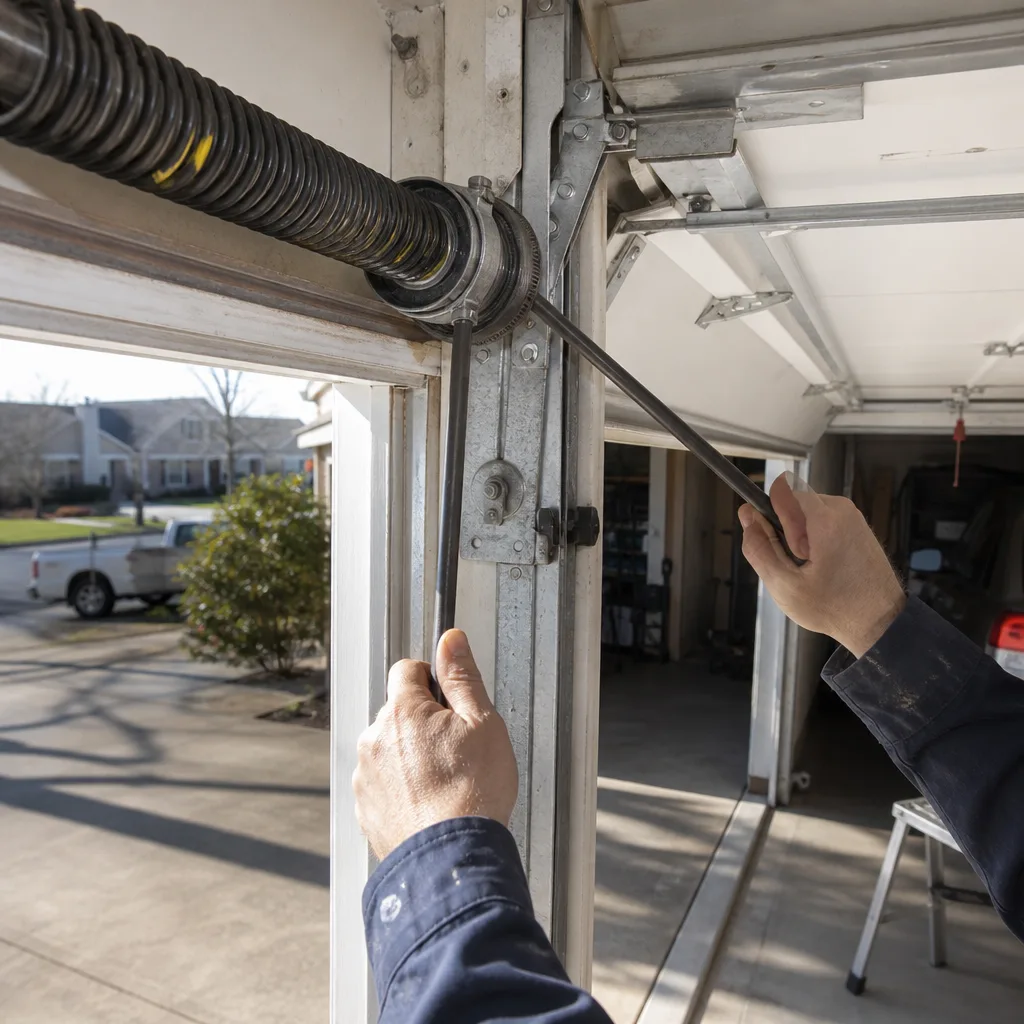
- Inspect the springs and cables. Look for a visible gap in a torsion spring, a stretched or loose extension spring, or a cable that has come off its drum or is hanging slack. A broken spring is obvious once you know what to look for: a clean gap in the coil. If you see one, stop – don’t touch it and don’t run the door.
- Test the door by hand. With the opener disengaged, lift the door manually about halfway. It should feel balanced and stay where you put it. If it feels extremely heavy going up, or drops on its own coming down, a spring has likely failed and the door shouldn’t be motorized.
- Check the bottom seal and the floor. After flooding or heavy rain, the bottom seal and the track base may have taken on water. A seal that’s sitting in water or is waterlogged will affect how the door seats.
- Reconnect only when everything checks out. If the door moves smoothly by hand, the tracks are straight, and there’s no visible spring or cable damage, re-engage the opener and test it. If anything looks off, leave it disengaged and call.
If the inspection turns up damage that means the door itself needs to be replaced rather than repaired, we handle that too – garage door installation covers the full scope, including brand-specific fit for Clopay doors, which are common on Norfolk homes and come in a range of panel and insulation styles. There’s no need to call a second company when a repair reveals the door has reached the end of its life.
Emergency Technician or Temporary Bracing? How to Decide
Knowing whether to call for emergency service or brace the door and wait for a scheduled appointment comes down to two questions: is the door a safety or security risk right now, and is a storm actively affecting the area? The decision tree below covers most situations.
Call for an emergency technician now if:
- The door is stuck open or partially open, leaving the house exposed.
- A spring or cable has failed and the door is heavy, hanging, or unstable.
- The door has dropped on or near a vehicle or person.
- The door has come off its track and is leaning or jammed.
- The opener is dead and you can’t secure the door another way.
Secure the door and wait for a scheduled visit if:
- A storm is currently active, making travel and work unsafe.
- The door is closed, locked, and stable, but won’t open.
- The opener is acting up but the door is still operable manually.
- You’ve spotted damage that needs repair but there’s no immediate security or safety risk.
The line between these is usually clear once you name the risk. A door stuck open in a quiet neighborhood is a security call. A door that won’t open on a calm day but is secure is a scheduling call. A door that’s dropped or lost a spring is always an emergency call. We offer same-day emergency service for urgent situations, and a free estimate for scheduled work. If you’re not sure which side of the line you’re on, call (855) 522-0573 – that conversation costs nothing and it’s better than guessing while a door sits open.
Common Mistakes to Avoid
- Trying to fix a broken spring or cable yourself. This is the highest-risk repair in the trade. Springs carry stored energy even when the door is down, and a failed spring under load can release suddenly. Call a trained technician.
- Running the opener on a bent track or broken spring. The motor will force the door and can make panel, track, or opener damage worse. If something is clearly wrong, disconnect and stop.
- Never testing the manual release. Norfolk homeowners discover during a storm that the red cord won’t pull because it’s been sitting for years. Test it before you need it.
- Yanking the emergency release cord hard. A steady downward pull disengages the carriage. A hard yank can snap the cord or damage the latch, leaving you with no release at all.
- Standing under a door with a failed spring or cable. Treat a door that’s lost a spring as unstable. Keep everyone clear and don’t try to lift it off a vehicle or a person yourself.
- Reconnecting the opener before inspecting storm damage. Running the opener on a door that’s been pushed out of alignment can turn a track fix into a full door replacement.
- Leaving a non-functional door unsecured going into a storm. A door that can’t be repaired in time can still be locked and braced. Don’t leave it open or unlatched as weather approaches.
See the difference
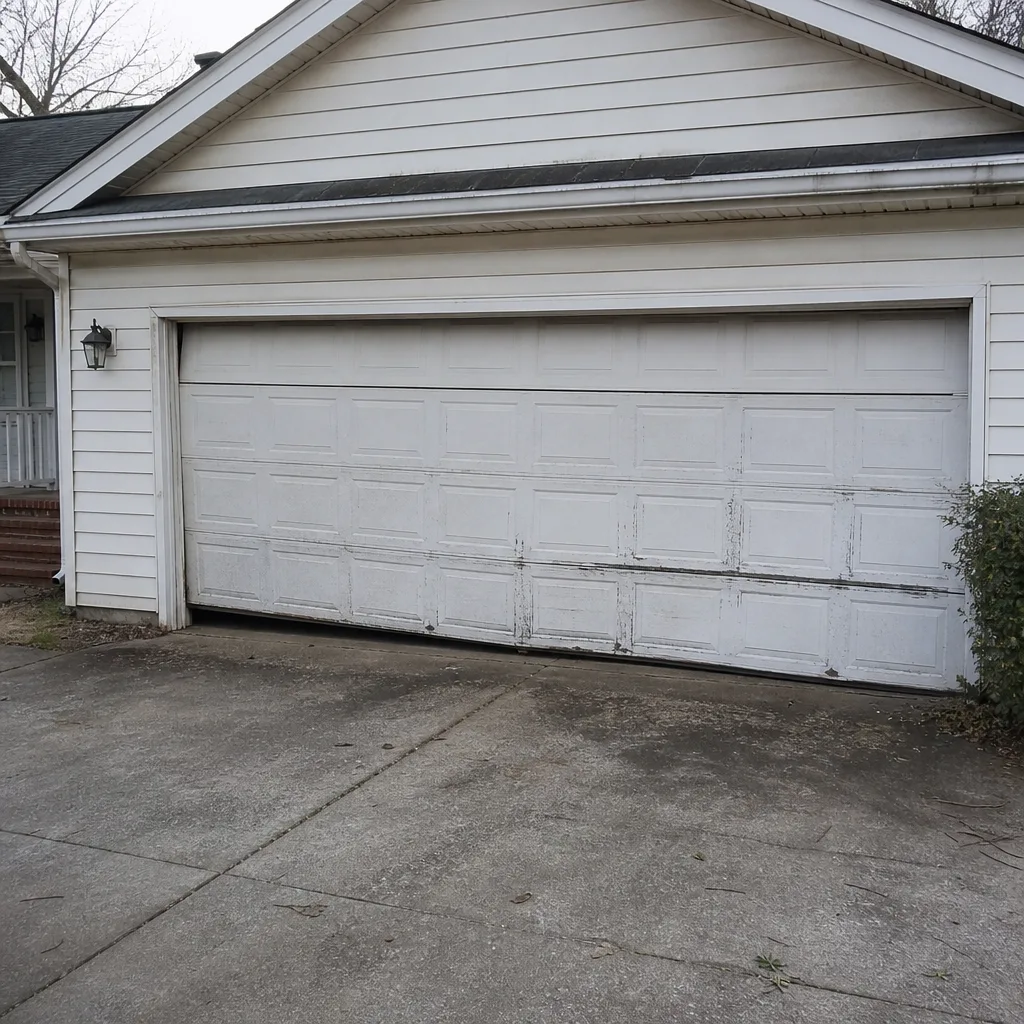 Before
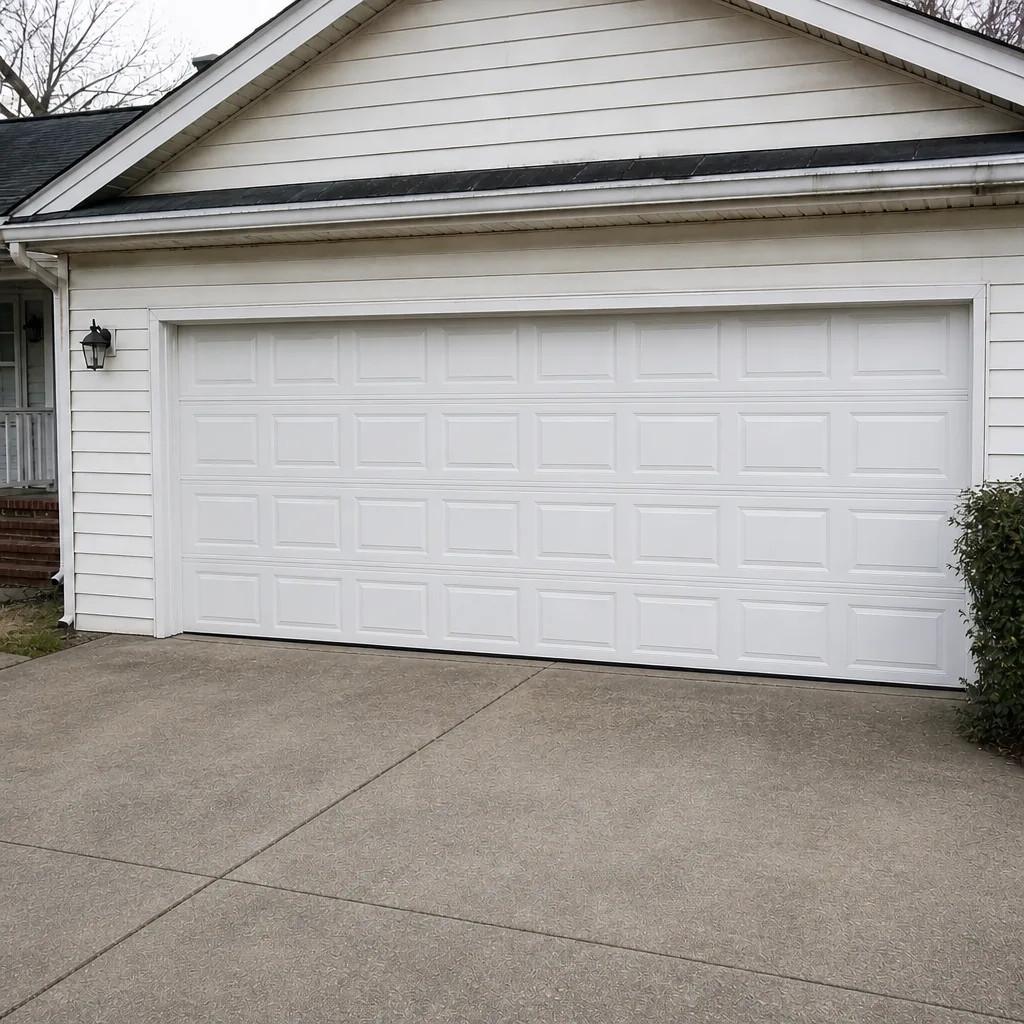 After
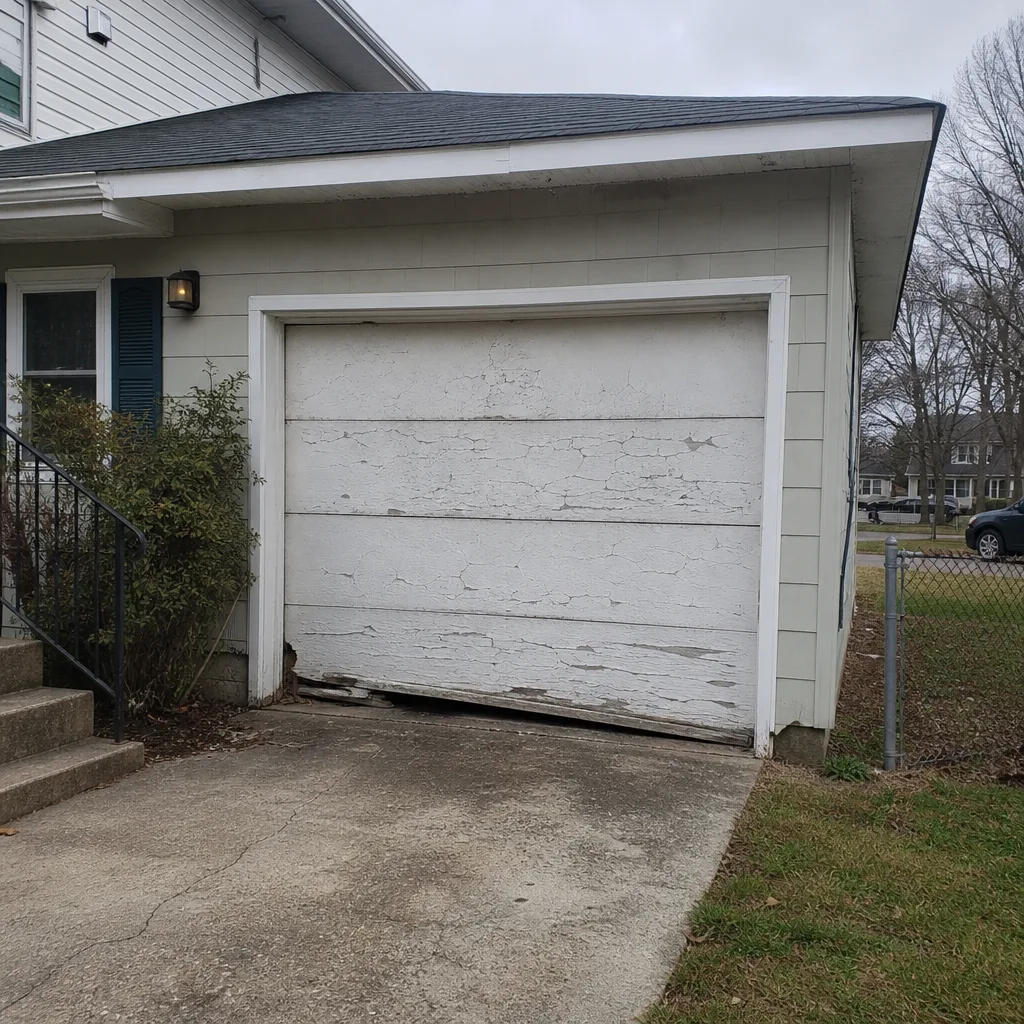 Before
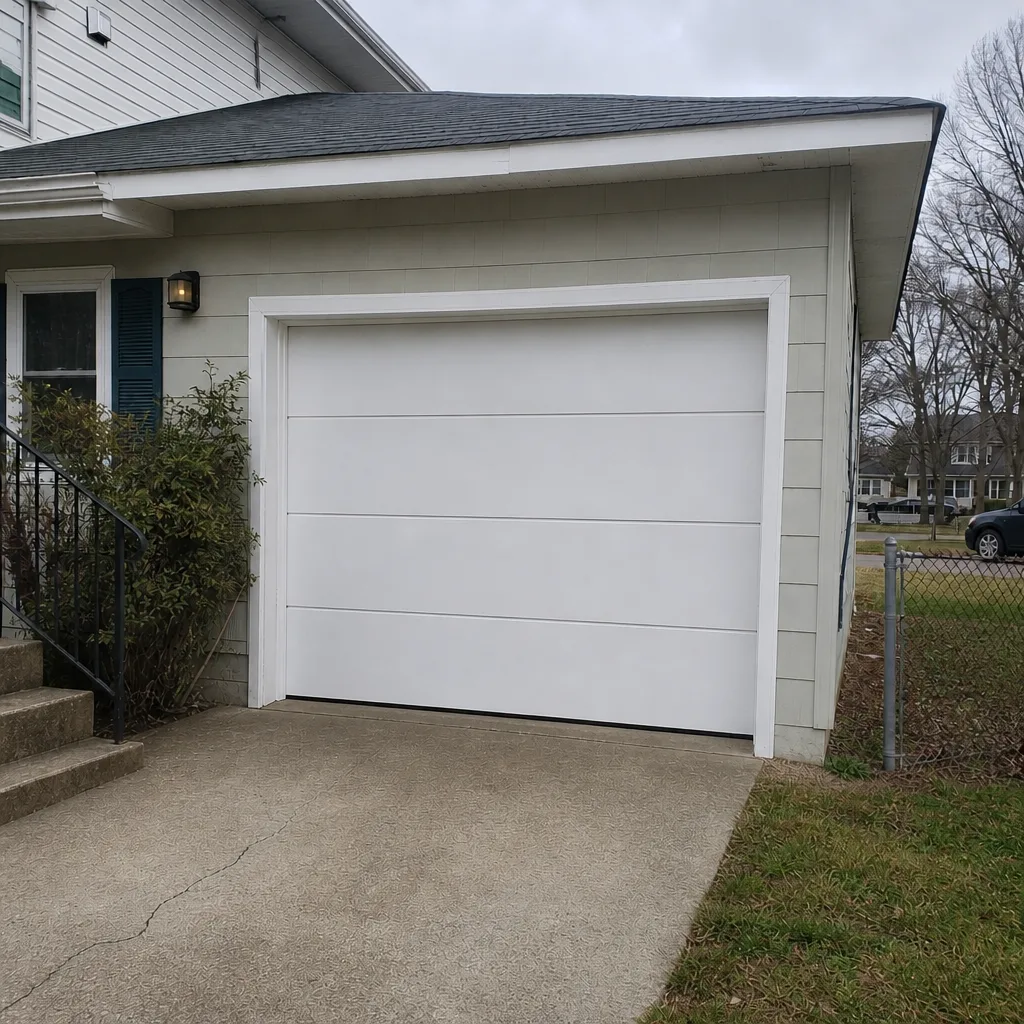 After
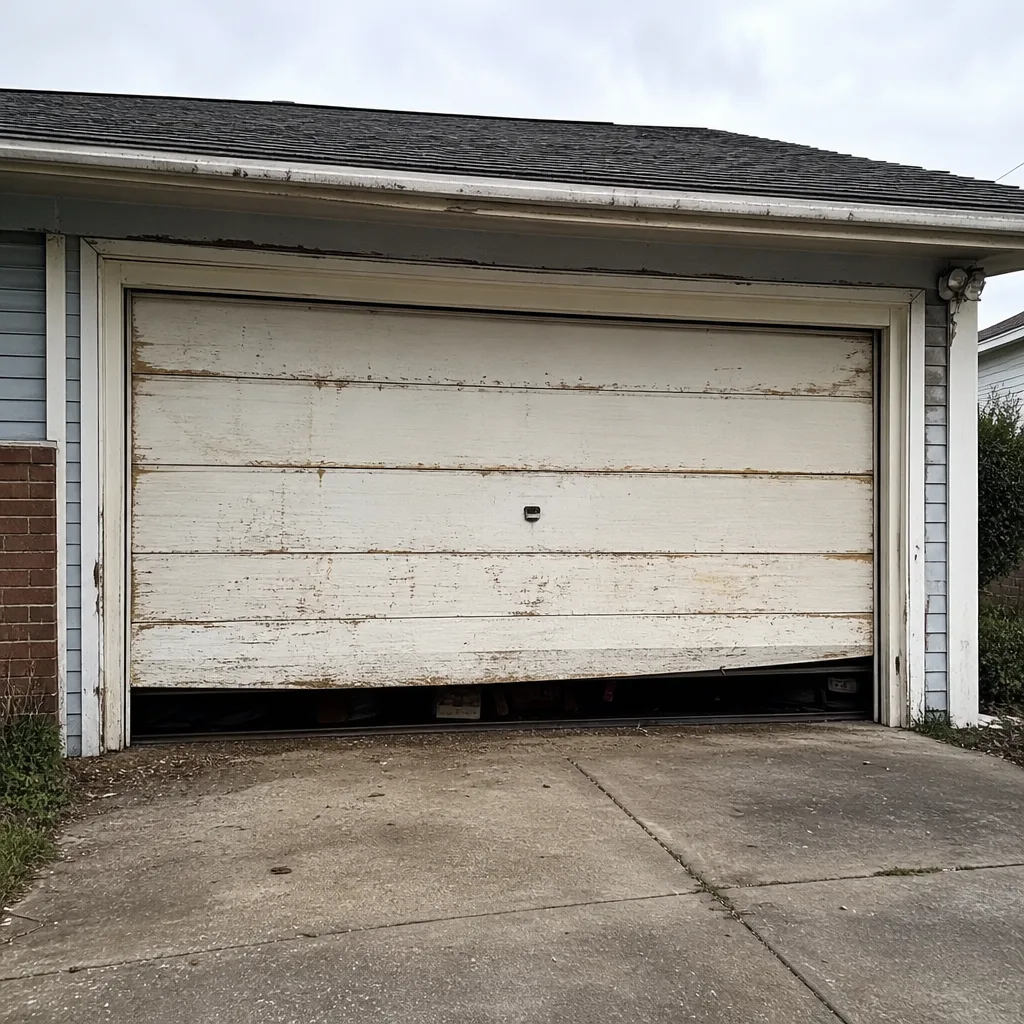 Before
 After
When to Call a Professional
Call a professional whenever the door is unstable, whenever the risk involves springs or cables, and whenever the door is your security perimeter. That means a door stuck open, a door that’s dropped or lost a spring, a door off its track, an opener that’s failed and left you unable to secure the house, or any storm damage that leaves the door misaligned or hanging. A stuck or broken door is often a same-day safety and security crisis, not a scheduled appointment, and we treat it that way – emergency service is a real, available option for urgent situations, not a marketing line. We repair first and replace only when necessary, and we work on your brand, whether that’s a LiftMaster opener, a Clopay door, an Amarr panel, a Wayne Dalton unit, or a Craftsman system. Garage Door Repair Norfolk Pros offers free estimates in Norfolk – call (855) 522-0573.
Frequently Asked Questions
Secure the opening first and repair later. If the door is stuck open, get it closed and braced or locked manually, keep people and vehicles clear, and don’t try to operate it while the storm is active. Once conditions are safe, call a technician to assess the damage and repair it.
Use the manual emergency release. Pull the red release cord hanging from the carriage on the rail straight down to disengage the opener, then lift the door by hand. If the cord is stiff or won’t pull, don’t force it – the door may also be heavier than expected if a spring has failed, in which case leave it and call us.
Yes. A failed torsion or extension spring can let the door drop suddenly, and if a vehicle or person is underneath, it’s a serious situation. Don’t try to lift the door yourself. Keep everyone clear, call 911 if anyone is trapped, then call us for the door.
Engage any manual slide locks or locking bars on the inside of the door, then brace the door on the interior with lumber to distribute wind pressure across its width. If a broken opener has left the door disengaged, the manual lock is what holds it shut. Call us if you need help figuring out the right bracing for your door type.
If you pulled the manual release during the outage, the opener is still disengaged from the door and won’t move it until the carriage is re-engaged. If the door still won’t run after re-engaging, the opener itself may have failed or a safety sensor may be misaligned – that’s a repair call, and estimates are free.
Yes. Emergency garage door service is part of our core offering for urgent, same-day situations, including doors stuck open, doors that have lost a spring, and openers that have failed and left a home unsecured. Call (855) 522-0573 for a free estimate and we’ll help you decide how fast the door needs a visit.
The Bottom Line
Norfolk garage door emergencies come in two shapes, and the response depends on which one you’re facing. Storm failures are about securing the opening – locking and bracing the door, keeping it shut, and waiting for the weather to pass before any repair. Mechanical failures are about speed and safety – keeping people and vehicles clear, not touching loaded springs or cables, and calling for a same-day visit because the door is now a security and entrapment risk. The one piece of preparation that pays off in both is testing your manual release before you need it. It’s the same red cord on your LiftMaster, Chamberlain, Genie, or Craftsman opener, and it’s the difference between a manageable problem and a dark garage with a door you can’t move. For repairs, spring work, opener failures, or a full replacement when a repair isn’t the answer, Garage Door Repair Norfolk Pros is one call away. Our technicians have up to 15 years of experience, and every job starts with a free estimate and a price you agree to before any work begins.
Call (855) 522-0573 for a free estimate on garage door repair, spring repair, opener repair, or a new door. We’ll diagnose what’s actually wrong with your system, tell you what it needs, and get it handled.
Written by the team at Garage Door Repair Norfolk Pros.