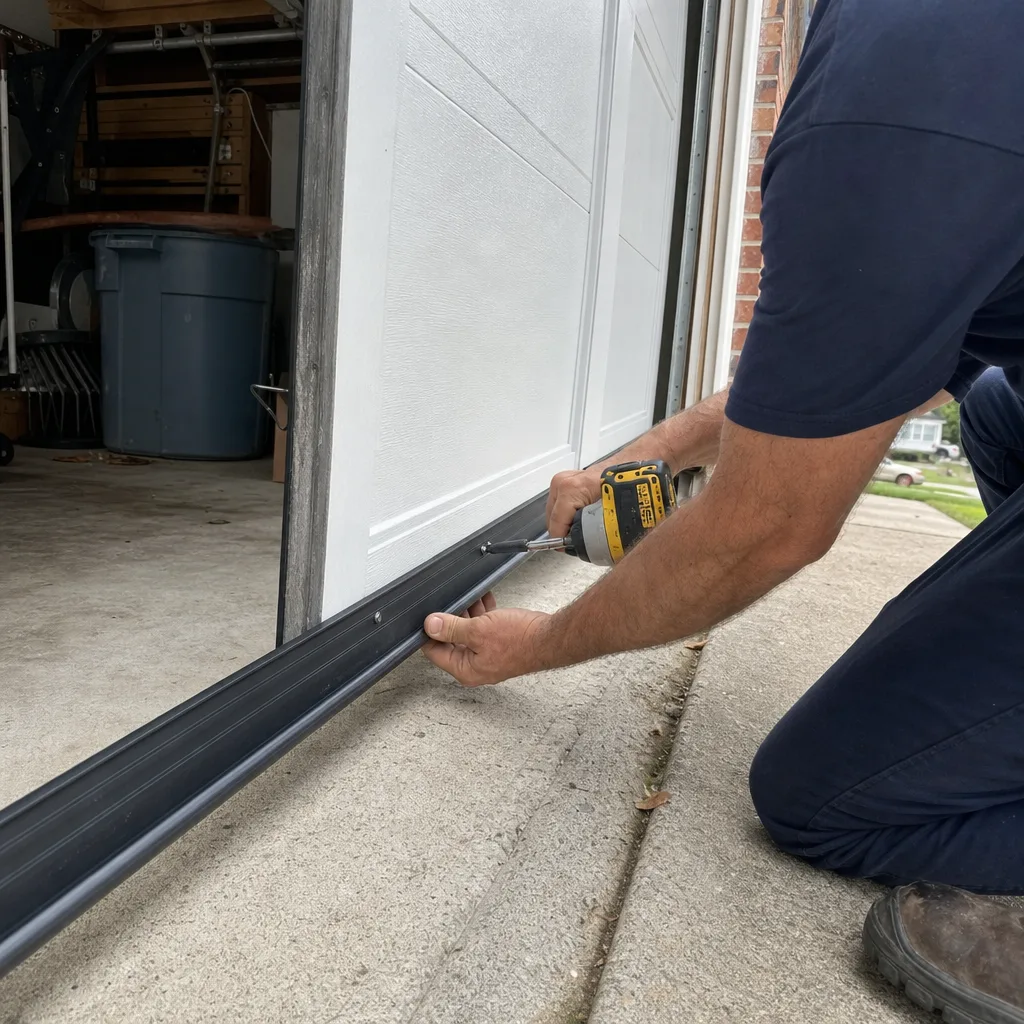
Last updated November 21, 2026
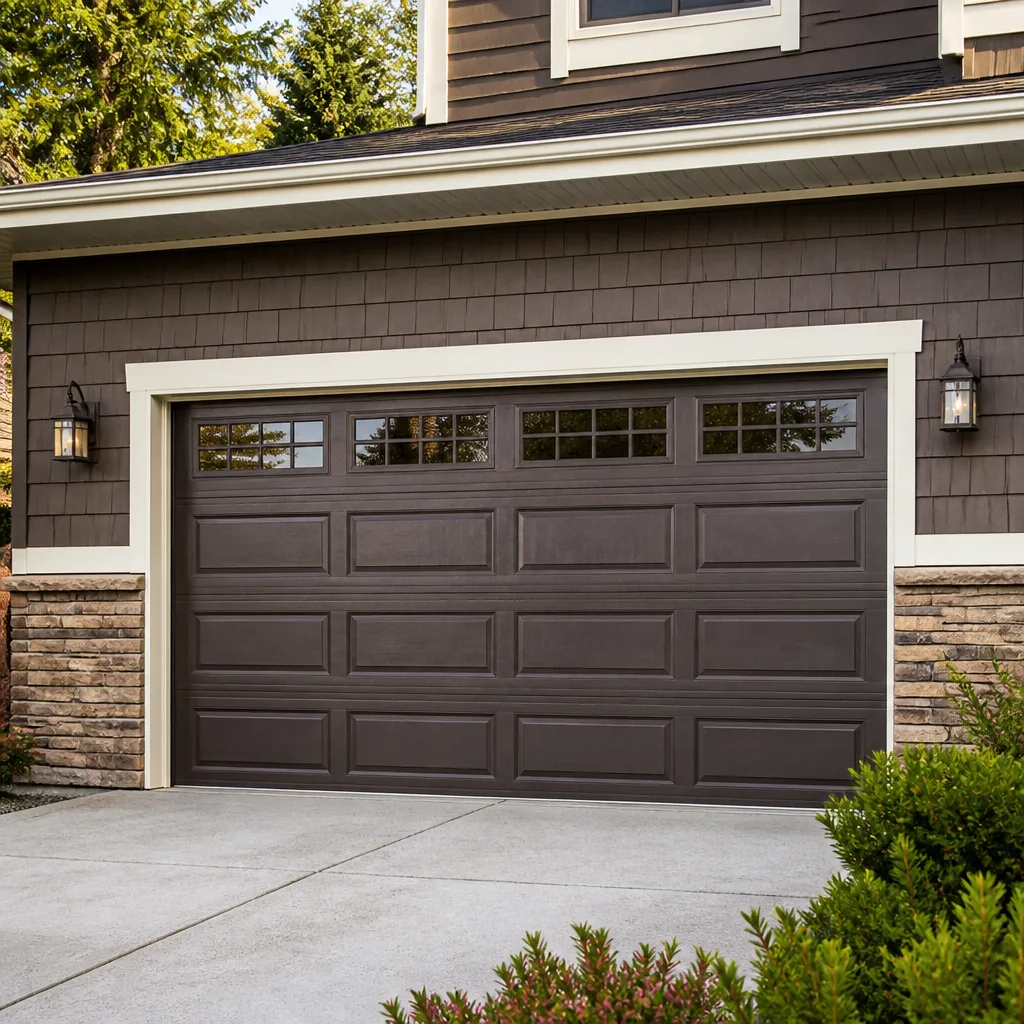 Raised-panel steel
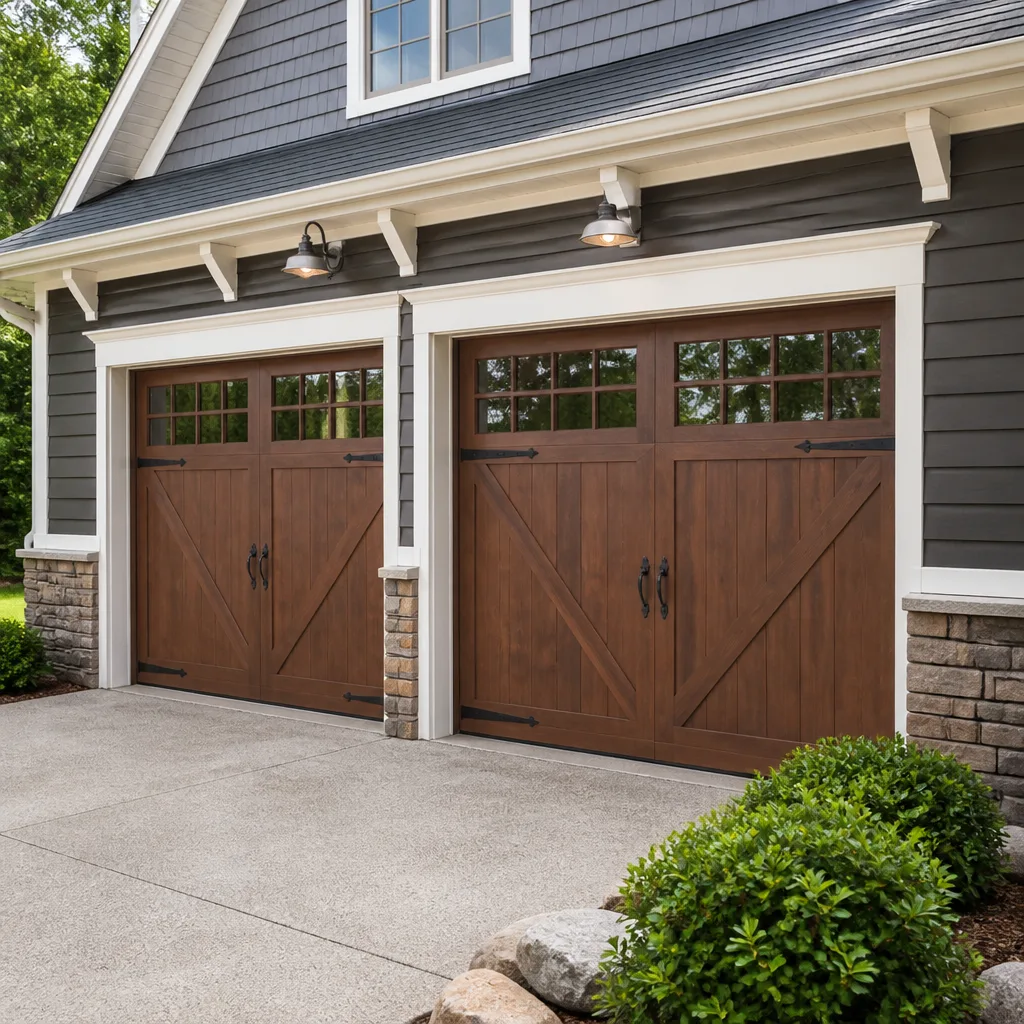 Carriage house
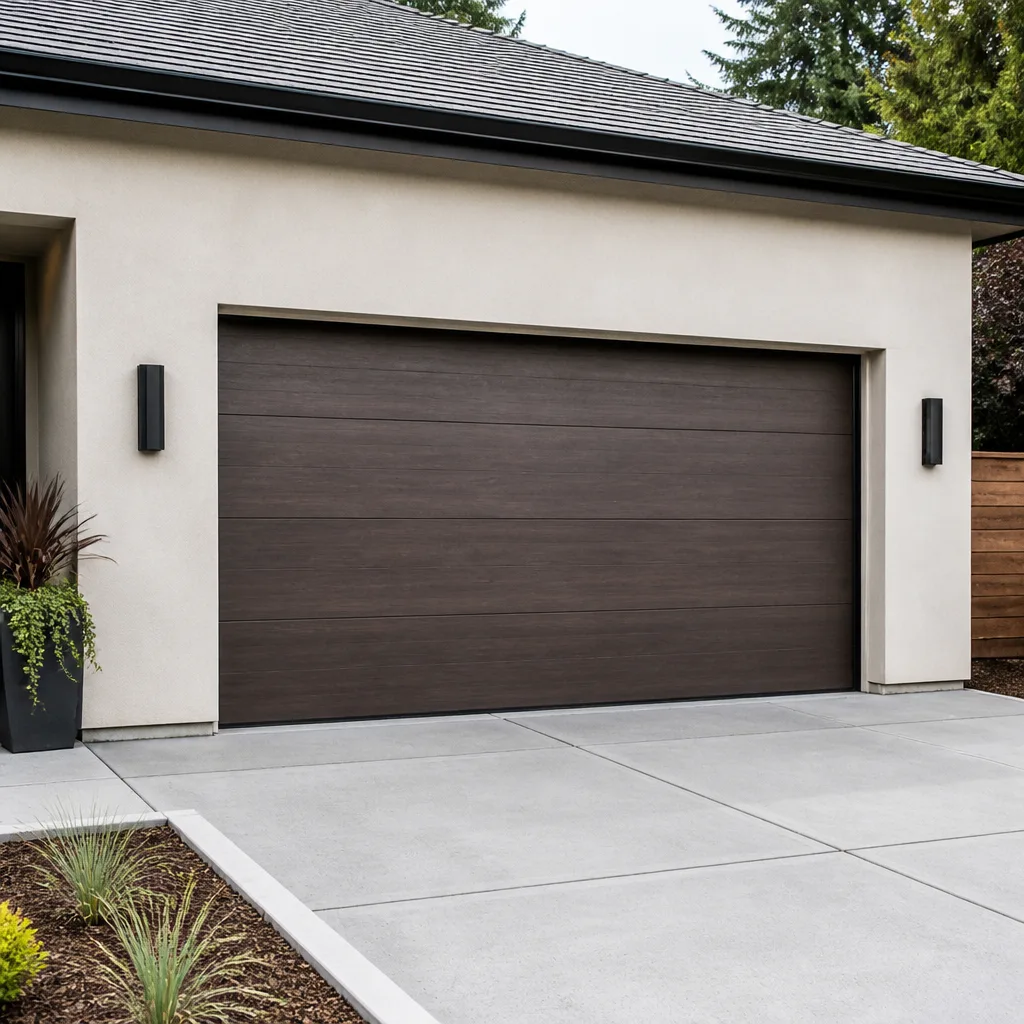 Modern flush
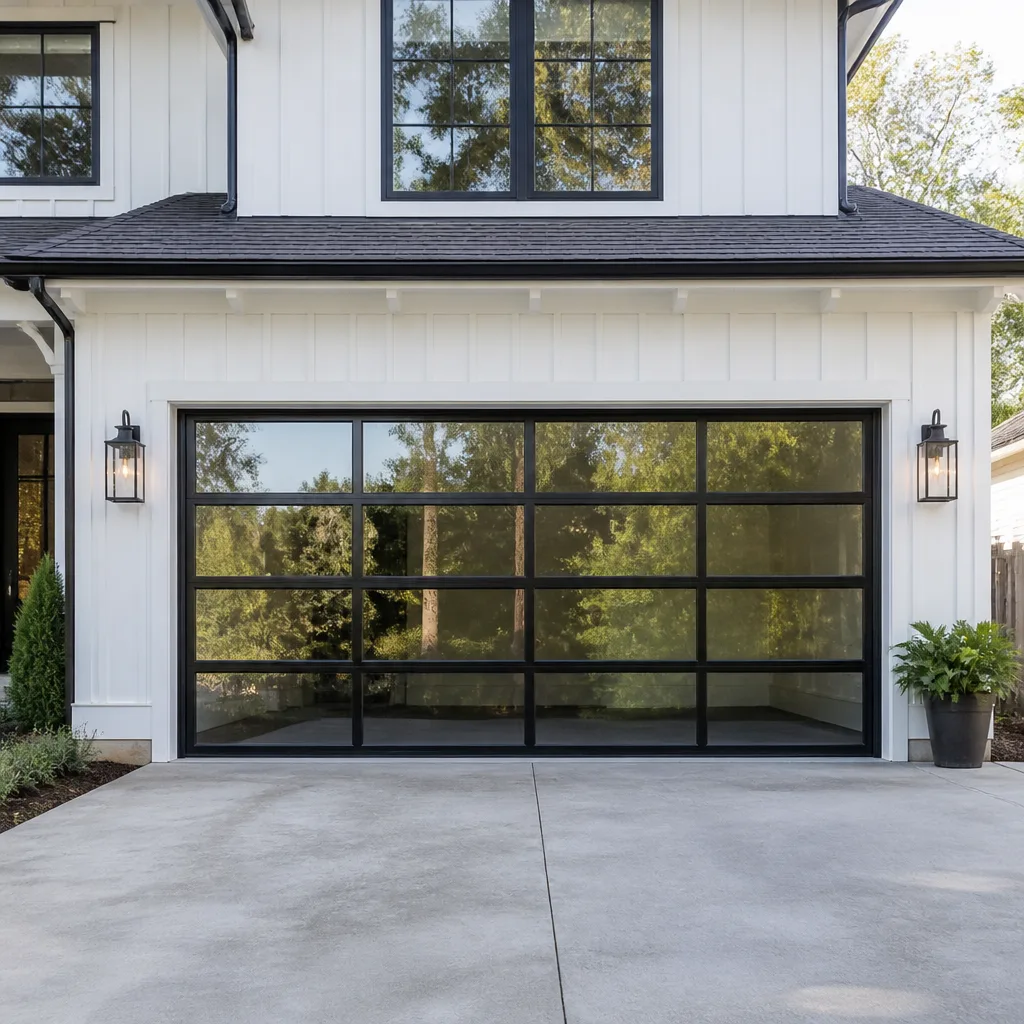 Full-view glass
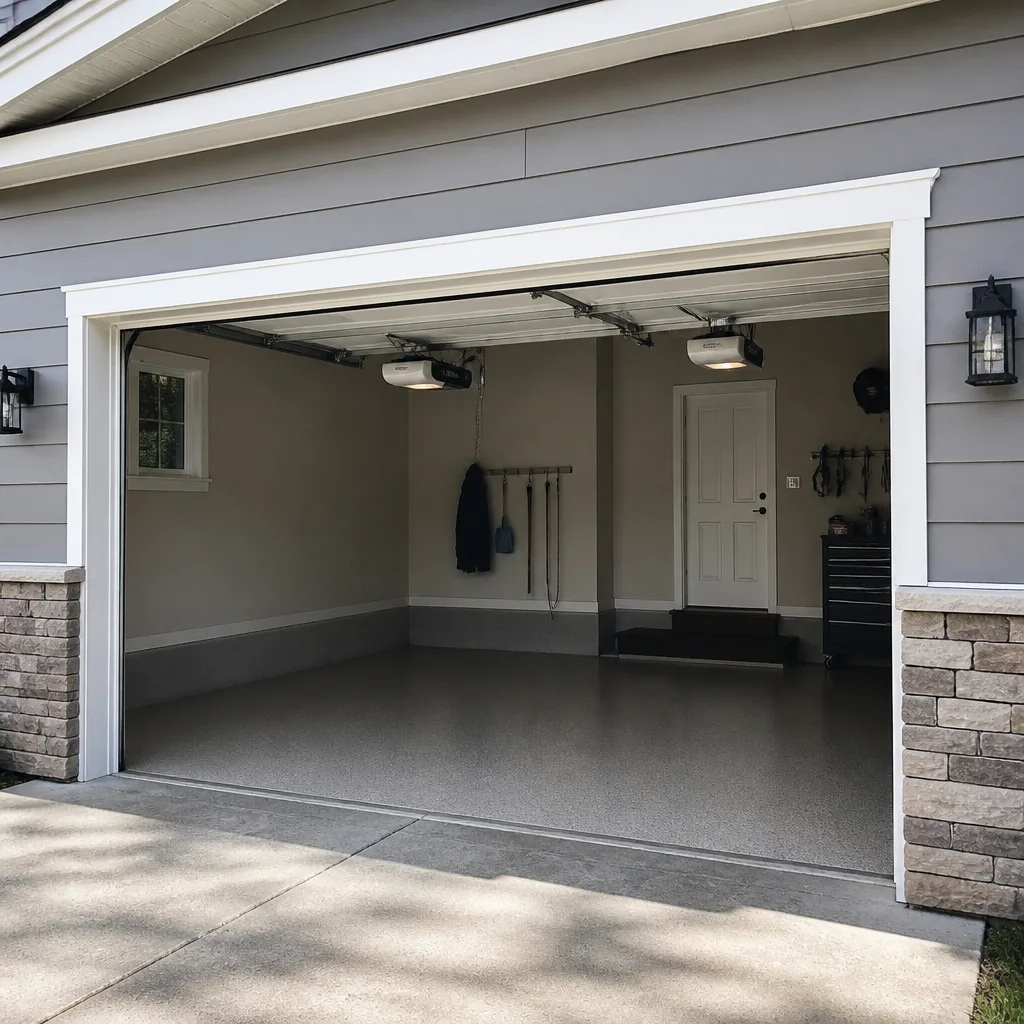 LiftMaster openers
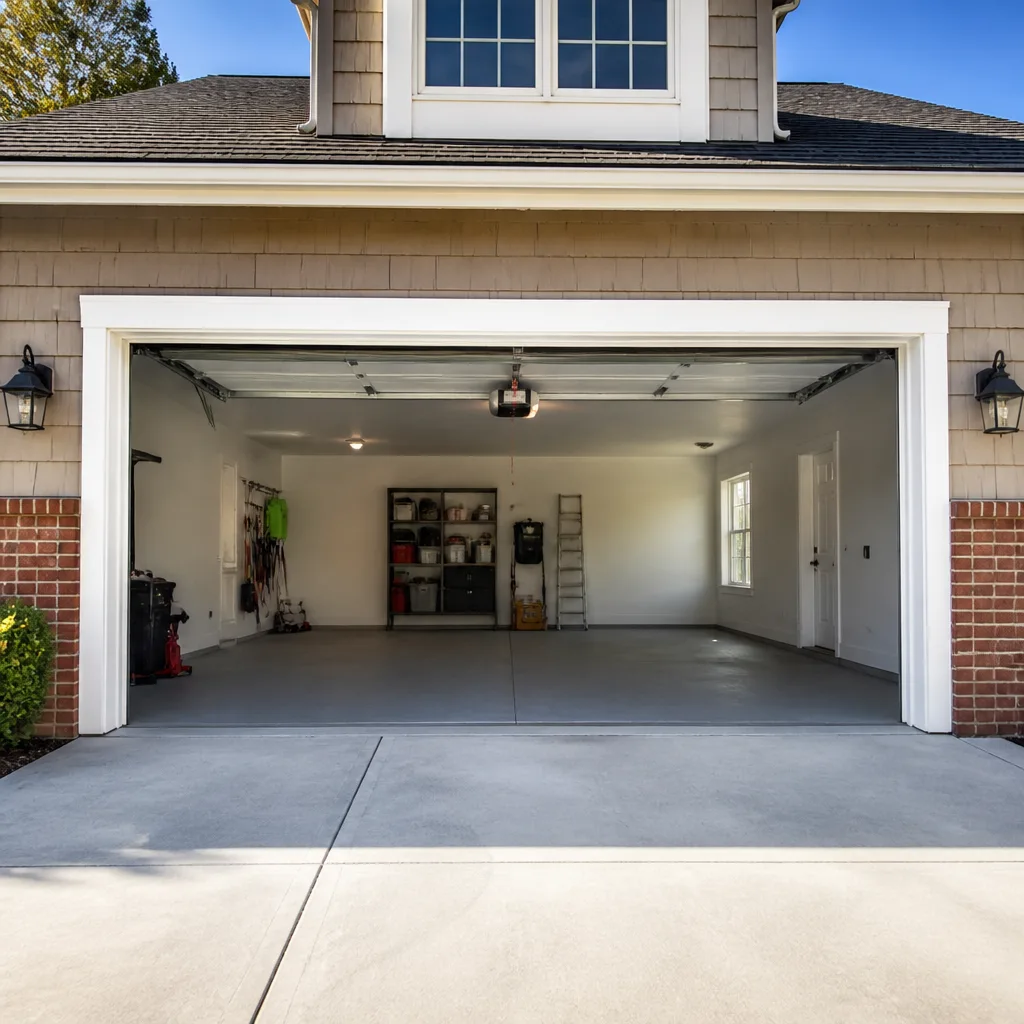 Chamberlain openers
Full 25-point door and opener safety check with every visit - springs, cables, rollers, tracks, and your LiftMaster or Chamberlain opener included
You get a price before we start. It does not change when the pro arrives.
Get your free estimateHow to Hire a Garage Door Contractor in Norfolk: A Step-by-Step Guide
Most hiring advice tells you to get three quotes and skim some reviews. That advice fails in Norfolk precisely when you need it most. After a nor’easter or a tropical system pushes through Hampton Roads, out-of-town crews arrive offering quick fixes, and many homeowners can’t tell a licensed Virginia contractor from a truck with a magnetic sign. The vetting that actually protects you is technical: can this person explain how a torsion spring stores energy, name the diagnostic steps for your opener, and put real part specs on a written estimate? This guide walks you through that process step by step, from verifying a license to reading an estimate line by line, so you hire competence rather than a friendly voice in Norfolk.
Quick Answer
To hire a garage door contractor in Norfolk, verify the company’s Virginia contractor license through the Department of Professional and Occupational Regulation (DPOR), confirm it carries general liability insurance, ask technical questions about springs and your specific opener brand, and insist on a written estimate that itemizes parts, labor, and hardware specs. A legitimate contractor will answer all of it without hesitating. Price and star ratings matter, but they won’t filter out an unlicensed operator.
Styles & brands we work with
- Raised-panel steel
- Carriage house
- Modern flush
- Full-view glass
- LiftMaster openers
- Chamberlain openers
Table of Contents
- Step 1: Verify the Contractor’s Virginia License
- Step 2: Ask Technical Questions That Reveal Real Competence
- Step 3: Spot Storm-Chaser Red Flags
- Step 4: Read the Written Estimate Line by Line
- Step 5: Test Whether “We Service All Brands” Is True
- The Spring Repair Conversation You Must Have
- Repair or Replace? How to Decide
- Common Mistakes to Avoid
Step 1: Verify the Contractor’s Virginia License
Start with the license, because everything else depends on it. Virginia regulates contractors through the Department of Professional and Occupational Regulation, known as DPOR. Garage door installation and repair generally falls under the residential contracting category, and the class of license (A, B, or C) ties to the dollar value of the projects a contractor is allowed to take on. The exact classification can vary with how the work is scoped, so confirm the specifics through DPOR rather than taking a contractor’s word for it.
Here’s how to check in practice:
- Ask for the contractor’s DPOR license number and the name it’s issued under. A crew that can’t produce one is a hard stop.
- Look up the number directly on DPOR’s public license lookup. Don’t rely on a screenshot or a card.
- Confirm the license is current, not expired or suspended, and that the class matches the scope of your job.
- Verify general liability insurance separately. Ask for a certificate of insurance and confirm it’s active.
- Check that the name on the license, the insurance, and the estimate all match.
In our experience, the mismatches are where problems show up: the license belongs to one entity, the estimate is written under another, and the insurance certificate names a third. A licensed operation will be consistent across all three. When you’re comparing companies in Norfolk, this single step eliminates most of the risk before you ever discuss price.
Step 2: Ask Technical Questions That Reveal Real Competence
Anyone can say they fix garage doors. The questions that separate a trained technician from a parts-swapper are the ones about how the system actually works. A torsion spring system stores energy in a coiled spring mounted on a shaft above the door; an extension spring system stores it in stretched springs running along the horizontal tracks. The two fail differently and are adjusted differently. If a contractor can’t explain which system is on your door and why it matters, that’s your answer.
Ask these when you call:
- “Is my door torsion or extension spring, and how do you tell?” A real technician describes looking at the mounting: a coiled spring on a center shaft versus springs stretched along the tracks.
- “How do you balance the door before you leave?” They should describe testing the door by hand at the halfway point to confirm it holds, and checking that the opener isn’t doing the lifting.
- “What’s the difference between a broken cable and a broken spring?” The symptoms overlap. A technician who knows the trade will describe how a snapped spring makes the door feel dead-weight heavy while a cable issue usually lets the door move unevenly.
- “Which opener platforms do you diagnose regularly?” You want to hear specific brands, not a vague “all of them.”
- “When would you adjust the tracks versus replace them?” Alignment is a diagnosis, not a default replacement.
These questions matter more in Norfolk than in a lot of markets. The region sees real weather swings, from humid summer heat that stresses opener electronics to winter cold that makes older springs brittle, and a technician who works here should understand how that affects his diagnosis. For a deeper look at what a proper diagnostic visit covers, our garage door repair page explains the process in detail.
Step 3: Spot Storm-Chaser Red Flags
Storms bring both damage and opportunists. After a major system moves through Hampton Roads, out-of-state crews often appear offering garage door work, sometimes before you’ve even had a chance to assess the damage. Some are legitimate; many aren’t licensed in Virginia at all. The tell isn’t whether a crew looks professional. It’s whether the paperwork holds up and whether the company can be found again when something goes wrong.
Watch for these warning signs:
- No Virginia DPOR license, or a license number that doesn’t match the person standing in front of you.
- A magnetic sign or a hand-written invoice with no company address, no license number, and only a mobile number.
- Pressure to sign right now, especially on a large job, with the promise that the price goes up tomorrow.
- A lump-sum quote with no parts named and no brand specs.
- Cash-only payment or a large upfront deposit demanded before any work.
- No verifiable local history you can confirm independently: check the license, and check that the company can be reached after the job.
- Warranty promises that won’t be written down. A real warranty appears in the estimate and the final invoice.
The reason this matters in Norfolk is timing. Homeowners under pressure after a storm reach for whoever answers fastest. Calling a stable local company that verifies through DPOR, carries insurance, and puts the work in writing removes the guesswork. For urgent situations, a legitimately licensed operation should still be able to respond quickly; emergency garage door service is part of what a real local provider offers, and speed and paperwork aren’t opposites. You can read more about how we handle urgent calls through Garage Door Repair Norfolk Pros.
Step 4: Read the Written Estimate Line by Line
A written estimate is a diagnostic document, not a formality. A legitimate one tells you what failed, what part replaces it, and what the finished job should look like. A vague lump-sum quote tells you nothing about what you’re paying for and gives the contractor room to change the scope later. Ask for the estimate in writing before any work begins, and confirm that the price on the estimate is the price you’ll be billed.
What a proper estimate should itemize:
- Parts by name and type. For a spring job, that means specifying torsion versus extension, and the spring’s wire size and length rather than just “spring, one.”
- Labor, described as a separate line. You want to see that the technician’s time isn’t buried inside a mysterious total.
- Hardware specs for any cables, rollers, hinges, or drums being replaced, with the brand where it applies.
- Opener model if the opener is part of the job, named specifically.
- Warranty terms on parts and labor, in writing.
- Disposal of the old door or components, if that’s included.
Ask one direct question before signing: “Is this the total price, or can it change once you open the system up?” A straight answer is yes or no. A vetted local professional quotes and agrees the price before work starts, and if hidden damage turns up mid-job, you should hear about it before anything else is touched, not on the invoice.
Step 5: Test Whether “We Service All Brands” Is True
“We service all brands” is the most repeated and least verified claim in this trade. The way to test it is to name your brand and listen for diagnostic specifics. A company that knows LiftMaster, Clopay, and Amarr systems will answer differently for each. LiftMaster and Chamberlain openers share a lot of platform lineage, but the logic boards and reversing sensors differ by generation. Clopay and Amarr build doors with different panel construction and track profiles, which affects how you diagnose a binding door or replace a panel. Say the brand and see whether the response changes.
Ask a brand-specific question and see what happens:
- On Clopay or Amarr doors: “How do you source a replacement panel that matches my door?” You want to hear about model numbers and finish matching, not a shrug.
- On a Wayne Dalton door: these often use proprietary track and hardware, and the answer should reflect that rather than a blanket “we’ll make it work.”
- On a Raynor door: ask how they’d handle a spring replacement when the door uses a specific drum and cable arrangement.
- On a Craftsman opener: ask how they’d approach a remote that’s stopped pairing and whether they’d check the logic board or just swap the opener.
- On any opener: “What diagnostic steps do you run before you recommend replacing the unit?”
A company fluent across brands diagnoses the actual problem instead of defaulting to a single-brand replacement. We work across LiftMaster, Chamberlain, Genie, Clopay, Amarr, Wayne Dalton, Craftsman, and Raynor, and the goal in every case is to repair first and replace only when the diagnosis says so.
The Spring Repair Conversation You Must Have
Springs are the most dangerous part of a garage door, and how a contractor talks about them tells you almost everything. A torsion spring or extension spring under tension holds enough stored energy to cause serious injury if it releases unexpectedly. This is not a component to work on yourself. A trained technician uses proper winding bars, secures the door, and knows the sequence for releasing tension safely.
When you discuss spring repair, the important questions are:
- “Which spring system is on my door, and what’s the failure?” Torsion and extension springs fail in different ways and require different repair approaches.
- “Are you replacing one spring or a matched pair?” A matched pair is the safer choice when one spring fails, because the springs are wound to balance the door together. A single-spring quote is typically for one spring; a pair costs more because two springs are being replaced.
- “What spring specs are going on the estimate?” Wire size and length tell you the part is matched to your door, not a generic one-size spring.
- “What’s the warranty, and what does it cover?” Get it in writing.
A safety-focused answer should warn you not to touch a spring yourself and explain why. Any contractor who glosses over that point is not one to hire. Spring repair is a named, dedicated service for a reason. Our garage door installation page covers the related point about how the right hardware matters from day one.
Repair or Replace? How to Decide
Listen closely to how a company frames repair versus replacement. A company driven by diagnostics will try to fix what failed. A company that treats every call as an install opportunity will push a replacement. In Norfolk, where humid summers and winter cold work on doors and openers year after year, the honest answer often depends on the age and condition of the hardware rather than on a single point of failure.
Reasons to lean toward repair:
- The door structure, panels, and tracks are sound, and a spring, cable, roller, or opener failed.
- The problem is isolated to the opener or its remote.
- The hardware is still in reasonable shape and replacement parts are available.
Reasons to lean toward replacement:
- Panels are dented, rusted, or structurally compromised.
- Tracks are bent or the door has been dropped hard enough to twist the frame.
- The door is a very old model and parts are no longer available.
- The opener is failing repeatedly and repairs no longer make sense.
Ask the technician to explain why he’s recommending one path over the other. If the answer is “it’s not worth fixing” without a diagnosis, get a second opinion. If it’s “here’s what failed, here’s why replacing it is the sound choice,” that’s the answer you want. Opener problems deserve the same scrutiny. For the opener side specifically, our garage door opener repair page covers how brand-specific diagnosis applies to platforms like LiftMaster, Chamberlain, Genie, and Craftsman.
Common Mistakes to Avoid
- Hiring on price alone. The cheapest quote is often the least itemized, and the missing specs are where scope creep and surprise charges start. Verify first, then compare price on a level playing field.
- Skipping the DPOR check. A magnetic sign and a friendly manner aren’t a license. Look up the number before you let anyone near your door, especially in Norfolk after a storm.
- Accepting a phone quote as a final price. A real estimate comes after a technician looks at the system, and it’s written down. A price quoted sight-unseen is a guess.
- Letting a tech work on a spring without a written warranty. Springs fail again, and the warranty is what protects you if one does sooner than it should.
- Assuming “all brands” means the tech has actually worked on yours. Name your brand and listen for specifics. If the answer sounds generic, keep calling.
- Ignoring the opener while fixing the door. A door and opener are a system. If one is replaced and the other is failing or mismatched, you’ll be back on the phone soon.
- Paying a large deposit before any work or paperwork. A licensed contractor doesn’t need a large upfront payment to start a residential repair. Payment terms belong in the estimate.
See the difference
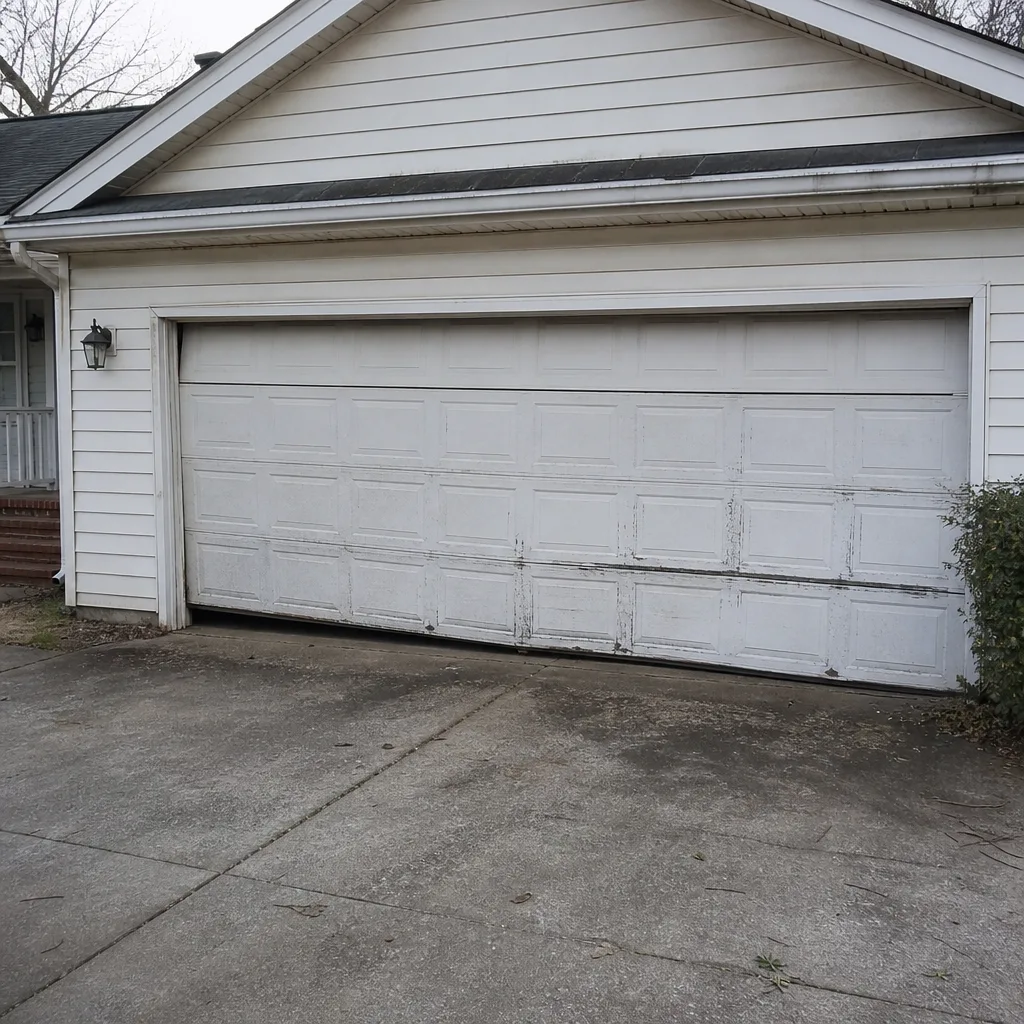 Before
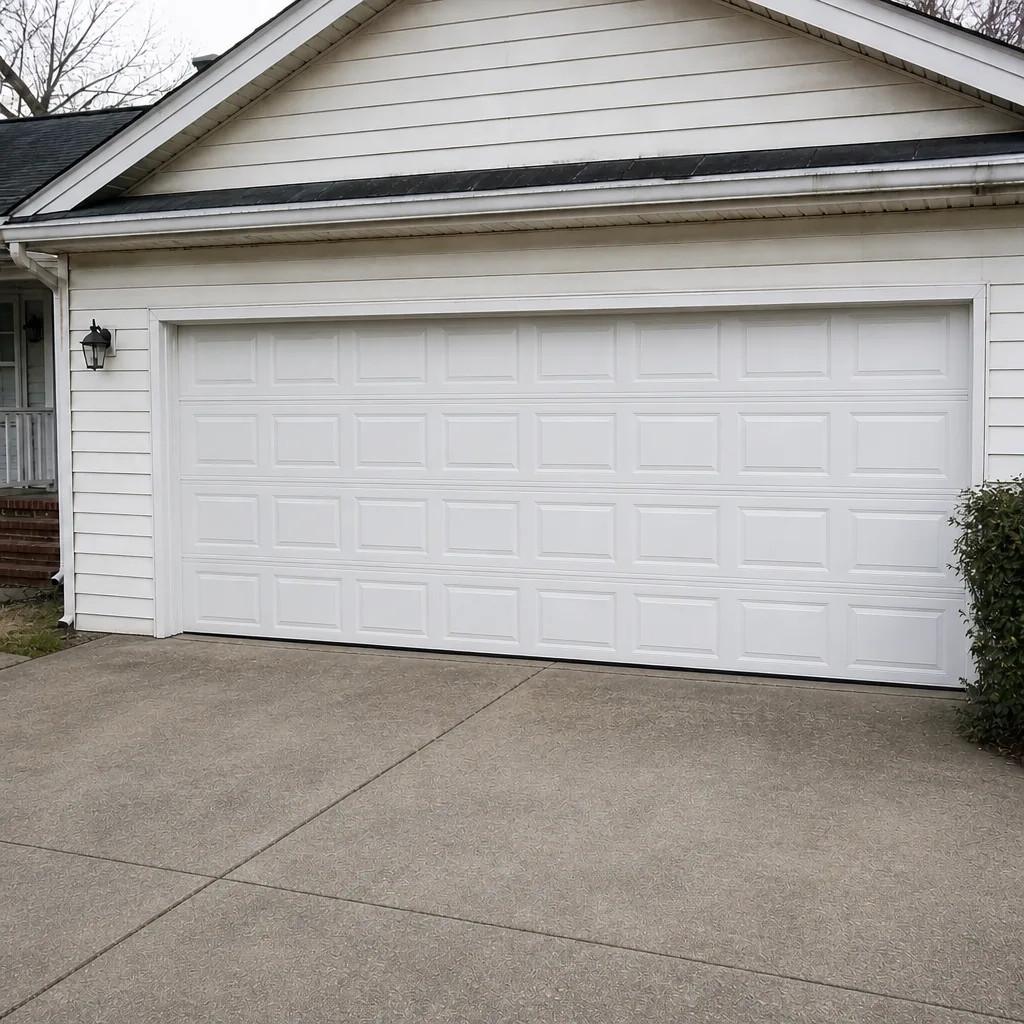 After
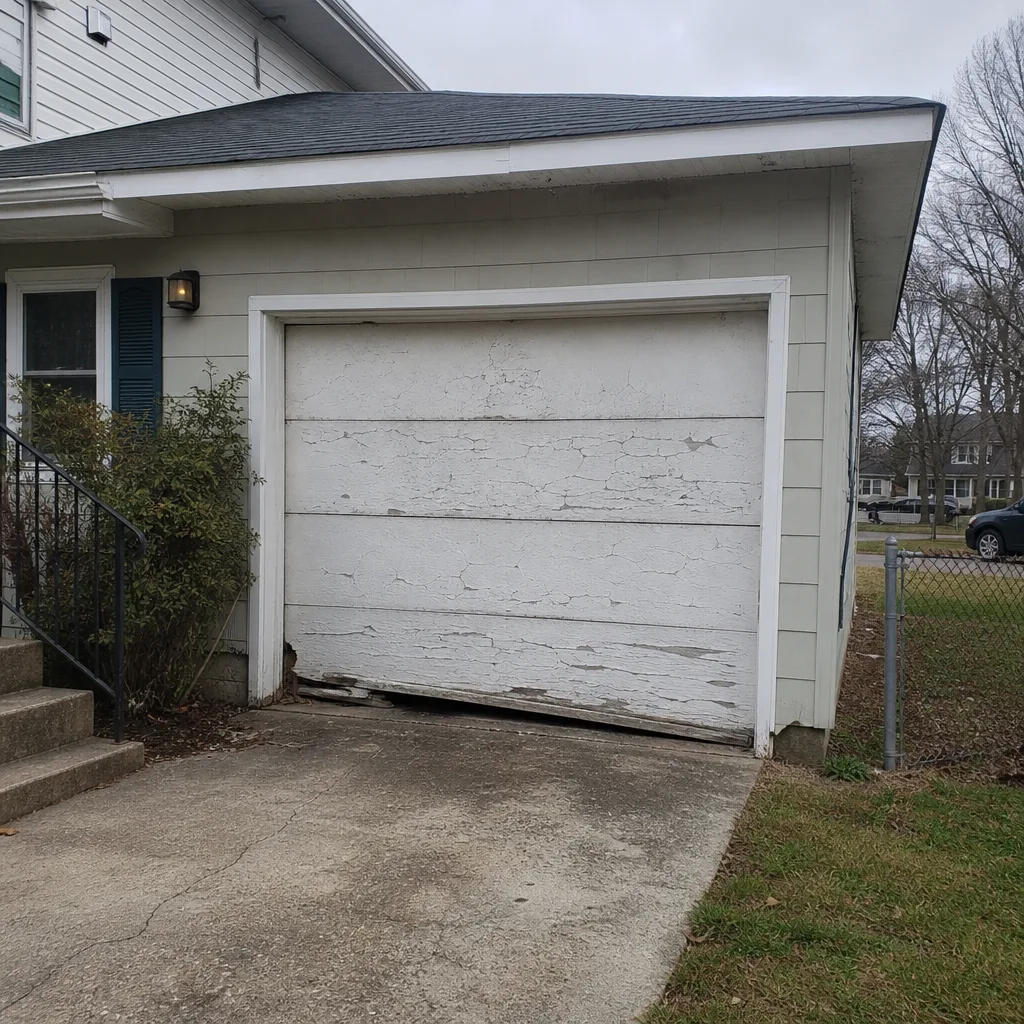 Before
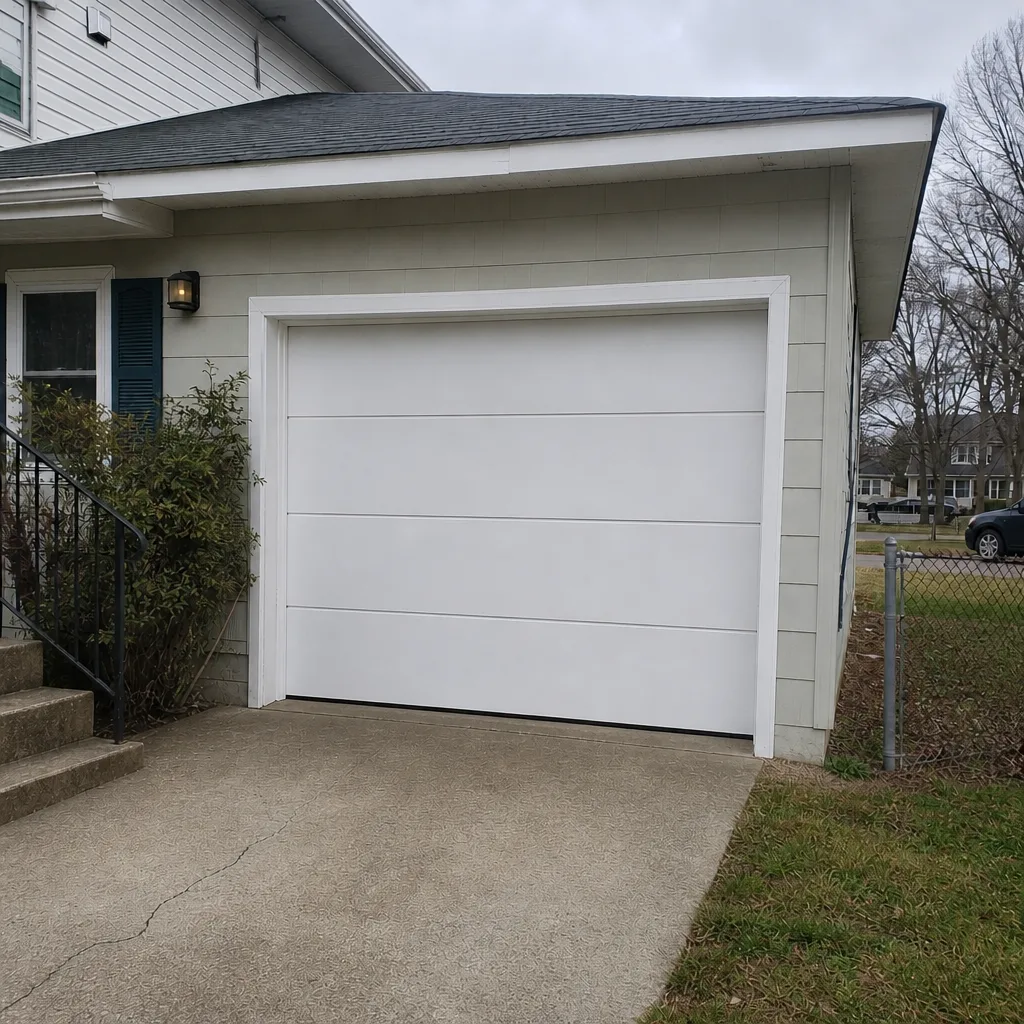 After
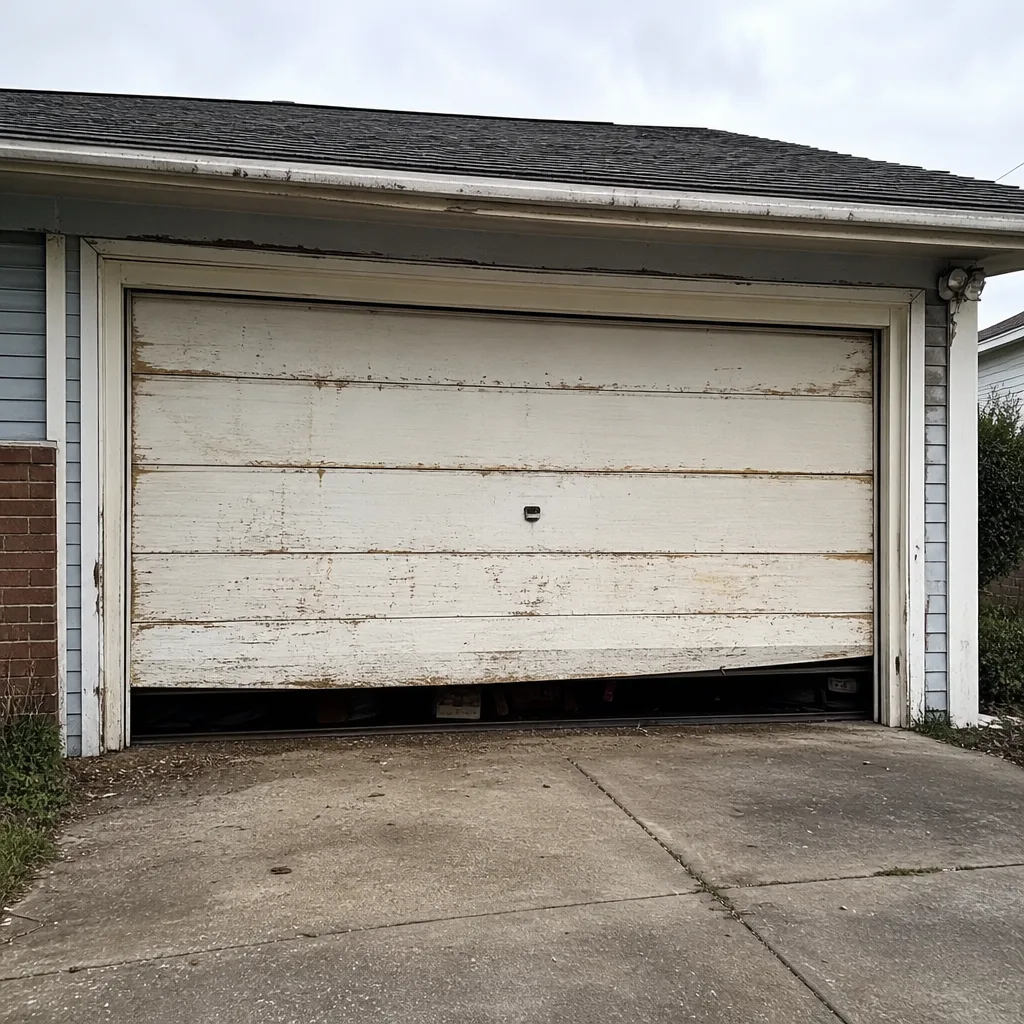 Before
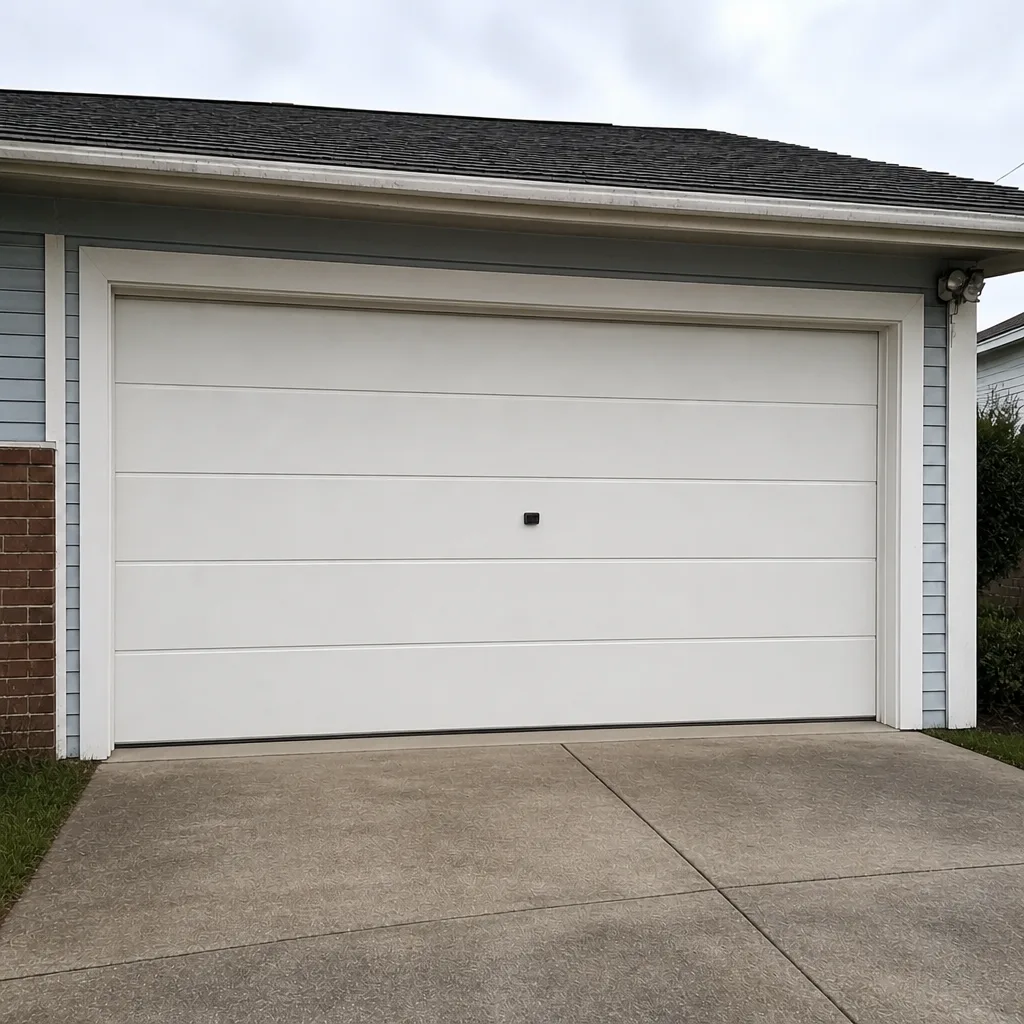 After
When to Call a Professional
Some garage door problems are safe to observe and not much else. If a spring has snapped and the door is very heavy, don’t force it up. If a cable is visibly frayed or hanging loose, don’t operate the door. If the door has come off its track or the opener is straining to lift a door it shouldn’t be lifting, stop using it. In each of these cases the danger is real, and a trained technician is the right call.
Other situations are less urgent but still worth a professional look: an opener that responds intermittently, a remote that’s stopped pairing, a door that reverses for no clear reason, or panels that no longer align. These are diagnostic questions, and the faster you get a technician out, the less likely a small problem becomes a bigger one. In Norfolk, Garage Door Repair Norfolk Pros offers free estimates in Norfolk. Call (855) 522-0573 to get one scheduled, and if your door has failed entirely, ask about emergency service.
Frequently Asked Questions
Look up the contractor’s license number through Virginia’s Department of Professional and Occupational Regulation (DPOR) before any work begins. Ask for the number, confirm it’s current, check that the license class matches the scope of your job, and confirm the company’s general liability insurance is active. If the license number, insurance certificate, and estimate name the same entity, you’re in good shape. If they don’t match, walk away. Call (855) 522-0573 for a free estimate from a vetted local professional.
A proper estimate itemizes the parts being replaced, the labor, and any hardware specs, plus the warranty terms and whether disposal is included. Spring jobs should name the spring type and specs; opener jobs should name the model. It should also state that the quoted price is the price you’ll be billed. If the estimate is a lump sum with no detail, ask for an itemized version before you agree. Estimates are free, so there’s no reason to accept a vague one.
They can be, especially after a major weather system moves through Hampton Roads. The risk isn’t that every out-of-town crew is dishonest. It’s that you can’t verify their Virginia license, insurance, or warranty from a truck and a hand-written invoice. Check DPOR, get the estimate in writing, and don’t pay a large deposit up front. A licensed local company will pass all of those checks. Call (855) 522-0573 to schedule a free estimate with one.
Spring repair is typically quoted per spring, and a matched pair usually costs about twice a single spring because two springs are being replaced together. The specific range depends on the spring type and door size, and the written estimate sets the final price. We quote and agree the price before any work starts. Call (855) 522-0573 for an exact quote. Estimates are free.
Emergency garage door service is part of our core offering, and a stuck or broken door is often a same-day safety and security situation. Call (855) 522-0573 as early as you can. Dispatch typically runs from 7am to 7pm, and we’ll tell you honestly what’s available. If you’re calling after hours, we’ll book you for the next available slot, including early mornings or Sundays.
No. The quoted price is agreed before any work starts, and the written estimate sets the final price. If the technician finds hidden damage once the system is open, you’ll hear about it before any additional work is done. You’ll never get a surprise invoice for work you didn’t approve. Call (855) 522-0573 for a free estimate and a clear price up front.
Written by the team at Garage Door Repair Norfolk Pros.
The Bottom Line
Hiring a garage door contractor in Norfolk comes down to verification, not vibes. Check the DPOR license and the insurance before you talk price. Ask technical questions that reveal whether the technician understands torsion and extension spring systems and can name real diagnostic steps for LiftMaster, Clopay, Amarr, or whoever built your door. Insist on a written, itemized estimate that names parts, labor, and hardware specs, and confirm the price before work starts. Do those four things in that order, and the out-of-town crews and vague lump-sum quotes filter themselves out. Keep our number handy for free estimates at (855) 522-0573. If you have questions about repair versus replacement, or about our garage door repair and garage door opener repair work, call us today.